
infrastructure
Vancouver to Baja: Five Governments Launch BC2BC Zero-Emission Truck Corridor
British Columbia joined California, Oregon, Washington and Baja California on Aug. 26 to launch the BC2BC corridor — a 1,381-mile electrified freight route along I-5 with 20 charging stations and 3 hydrogen stations planned, targeting full Class 8 electric truck runs by 2030.
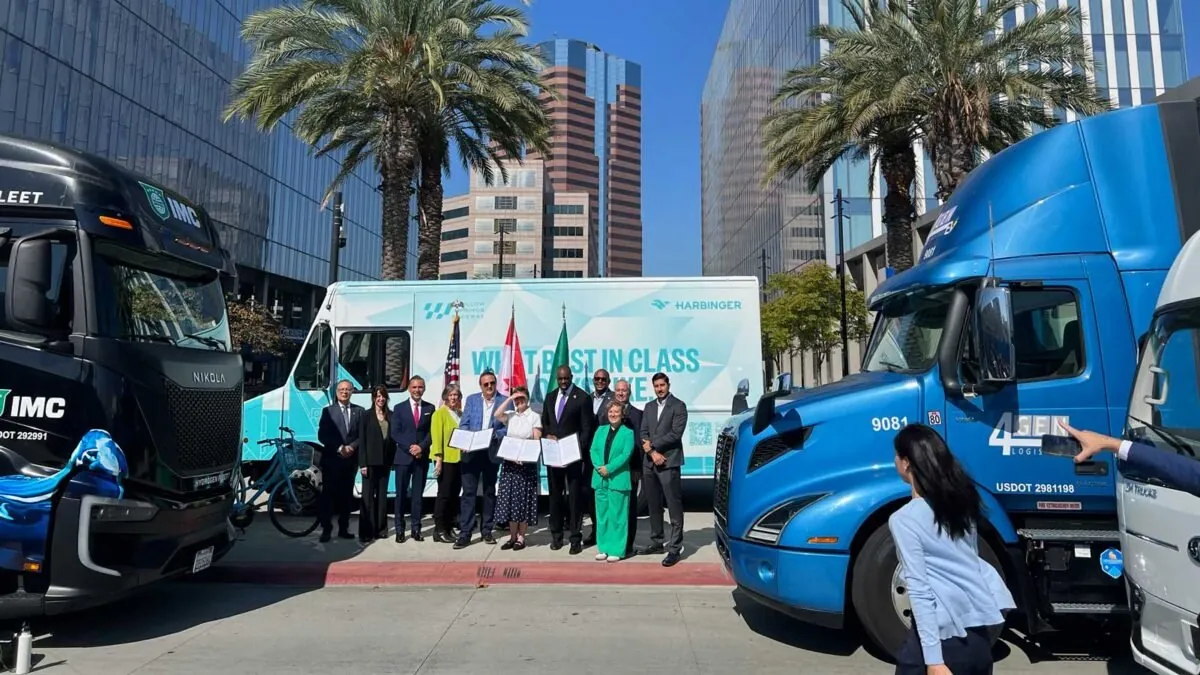
British Columbia is now the northern anchor of one of the most ambitious freight-electrification projects on the continent. On August 26, representatives from California, Oregon, Washington, B.C. and Baja California gathered at the Port of Long Beach to launch the British Columbia to Baja California Zero Emission Vehicle corridor — BC2BC — a plan to let electric heavy-duty trucks run the length of the West Coast along Interstate 5, from Vancouver to the Mexican border.
The numbers explain the ambition. The I-5 corridor spans 1,381 miles (about 2,222 km) and averages nearly 10,000 trucks per day — sometimes as many as 35,000 — making it a backbone of North American freight for agricultural products, lumber and consumer goods, as the Los Angeles Times reported. According to the launch announcement covered by Truck News, the initial buildout is expected to include 20 electric charging stations and three hydrogen fueling stations along the route.
What the five governments actually agreed to
The partners — three U.S. states, one Canadian province and one Mexican state — signed a statement of principles committing to coordinated technology, infrastructure planning and technical standards so charging and fueling systems are interoperable across jurisdictions. That means set intervals between charging stations, similar siting of infrastructure, and common standards for installed chargers, according to the Los Angeles Times. The target: Class 8 heavy-duty electric trucks driving the entire route as soon as 2030.
"Today marks the beginning of something extraordinary — a tri-national, five-state partnership to deploy charging infrastructure along Interstate 5," California Transportation Secretary Toks Omishakin said at the launch. The initiative is supported by the California State Transportation Agency, CALSTART's Drive to Zero campaign and the Institute of Transportation Studies at UC Davis.
Why freight electrification lags cars
Diesel heavy-duty trucks are an outsized pollution source: in California they represent just 6% of vehicles on the road but account for roughly 35% of nitrogen oxide emissions and 25% of greenhouse gas emissions from transportation, according to the California Air Resources Board. Yet long-haul freight has been hard to electrify because Class 8 trucks need hundreds of miles of range while hauling heavy loads, and charging infrastructure has been inconsistent — the exact gap a corridor approach is meant to close.
Fleet suppliers are watching closely. Volvo Group North America, Southern California Edison, Tesla, EV Realty and King Fio Trucking participated in the launch, and zero-emission trucks from IMC Logistics, Volvo, Tesla and ZM Trucks were displayed at the Port of Long Beach. "By aligning charging infrastructure, technical standards, and planning across jurisdictions, the BC2BC initiative can give fleets greater confidence to plan routes, maintain uptime, and make long-term investment decisions," said Aravind Kailas, advanced technology policy director at Volvo Group North America.
The Canadian connection
For B.C., the corridor plugs into an existing pattern: the province has been building out heavy-duty EV service capacity in Vancouver, and utilities rather than pure-play charging networks have been filling highway gaps. A standardized cross-border freight corridor gives Canadian carriers hauling into the U.S. West Coast a predictable charging map — and gives B.C.'s port logistics sector a cleaner route south. How much each government invests, and how many chargers the final network entails, remains undecided; Omishakin said the number is "probably in the hundreds if not higher."
Looking for EV deals, insurance, or financing? Check out our partner deals and offers.
If you found this guide helpful, use our Tesla referral link for free Supercharging credits on a new Tesla purchase or lease in Canada.
Next story · swipe left
Next story
Transport Canada Recalls 454 Teslas Over Headlights That Are Too Bright
3 min read
Transport Canada has recalled 454 Tesla Model 3 and Model Y vehicles whose low-beam headlights can exceed legal brightness limits — the Canadian follow-up to a 20,349-vehicle U.S. recall. Here's who's affected and what happens next.
The Charge Brief
Get Canada’s EV transition in your inbox
One email a day. No spam, unsubscribe anytime.