
technology
Volvo and NVIDIA Expand Partnership for Eyes-Off Autonomous Driving
Volvo Cars deepens its NVIDIA partnership to bring eyes-off and mind-off autonomous driving to future vehicles, using the Hyperion architecture and Alpamayo stack. First model and timeline unconfirmed.

Volvo Cars has expanded its long-standing partnership with NVIDIA to develop the next generation of autonomous driving technology, targeting gradual introduction of "eyes-off" and eventually "mind-off" capabilities where drivers can disengage from monitoring the road entirely.
Hyperion, Halos, and Alpamayo
The collaboration will use NVIDIA's Hyperion sensor and computing architecture, the Halos OS safety framework, and the Alpamayo Stack driving software. Volvo CEO Håkan Samuelsson described the union as combining "industry-leading safety knowledge and world-class AI technology."
The system is designed to handle highway driving, busy city streets, and parking, with a stated goal of door-to-door autonomous navigation. Unlike today's driver-assistance systems that require constant supervision, Volvo is explicitly developing for eyes-off operation — where the driver need not watch the road — and mind-off operation, where attention can shift entirely to other tasks.
Model and timeline unconfirmed
Volvo has not confirmed which vehicle will debut the technology or when it will reach customers. The automaker said the system will first appear in a "next-generation Volvo vehicle," but declined to specify whether that means a 2026, 2027, or later model year.
The expanded partnership follows Volvo's decision to move away from LiDAR after its relationship with Luminar collapsed. NVIDIA's vision-first approach, supplemented by radar and ultrasonics, now anchors Volvo's sensor strategy.
Competitive landscape
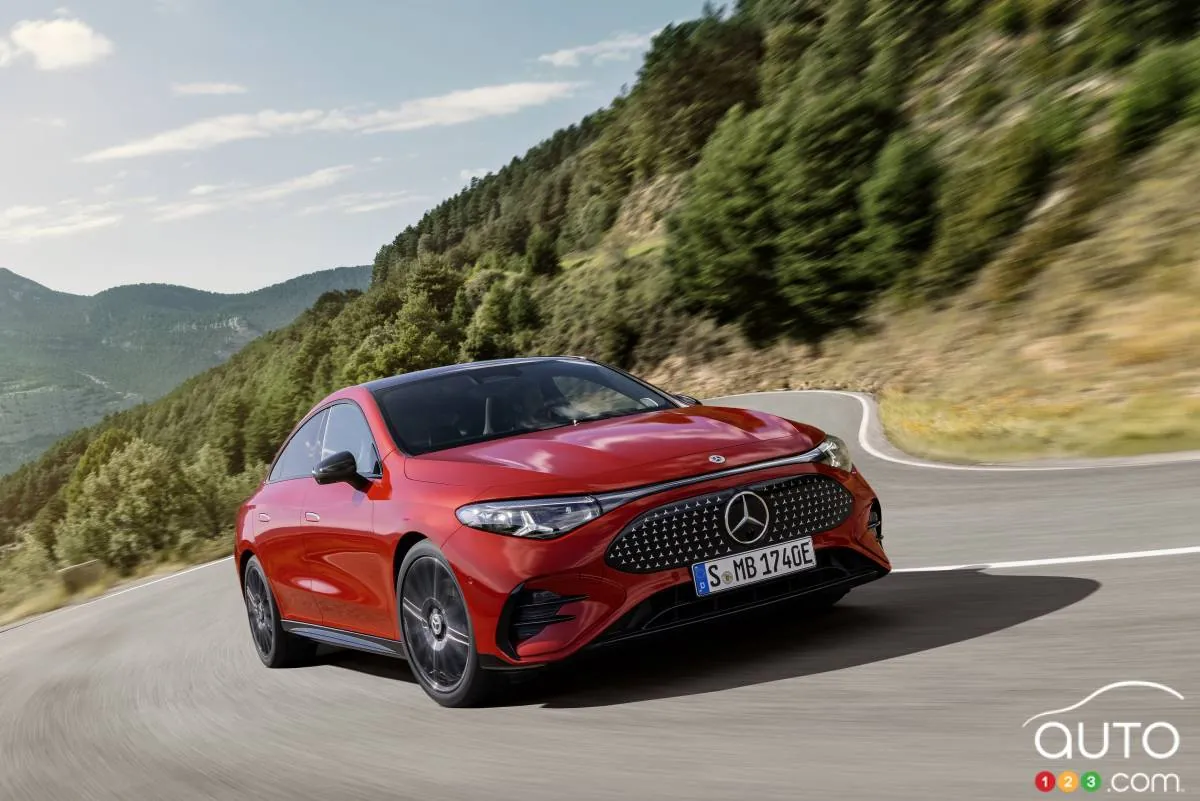
Volvo isn't alone in pursuing advanced autonomy with NVIDIA. Mercedes-Benz recently expanded its own NVIDIA partnership for the CLA and future models, while General Motors has confirmed an eyes-off system targeting a 2028 debut. Hyundai and Kia have also deepened their NVIDIA collaboration for autonomous driving and robotaxi development.
For Canadian buyers, the key questions remain: which model, which market, and under what regulatory conditions. Transport Canada's Automated Vehicle Safety Assessment framework would govern any eyes-off deployment, and provincial rules vary — Ontario's pilot program is the most developed, while Quebec and British Columbia are drafting frameworks.
Looking for EV deals, insurance, or financing? Check out our partner deals and offers.
If you found this guide helpful, use our Tesla referral link for free Supercharging credits on a new Tesla purchase or lease in Canada.
Next story · swipe left
Next story
Best Used Electric Cars in Canada 2026: Models That Aged Well
6 min read
Best used electric cars in Canada in 2026 — battery health, range retention, reliability, and resale value for EVs that still make sense as used purchases.
The Charge Brief
Get Canada’s EV transition in your inbox
One email a day. No spam, unsubscribe anytime.