

policy
Communities Are Funding Canada's EV Destiny Through Vehicle-to-Grid Bonds
Corporate Knights reports community finance is stepping up where federal policy fell short — EcoCharge raised $1.1M for Quebec fast chargers, V2G pilots show $310B utility savings potential, Indigenous 'electric highway' retains 100% charging revenue.

When Ottawa repealed the federal EV sales mandate in August, the message from government was clear: adoption would slow to market speed. But communities across Canada aren't waiting for policy to catch up — they're putting up their own money to build the charging network the country needs.
According to Statistics Canada, zero-emission vehicle sales jumped nearly 75% in March 2026 versus March 2025. If that compound rate holds, Canada reaches 100% EV sales by 2030. Even at a modest 6% annual growth, the transition completes by 2040. Corporate Knights' Climate Dollars research pegs the full electrification of Canadian road transport at $339 billion in capital investment — $46 billion for personal vehicles and charging infrastructure, plus another $35 billion to make the network vehicle-to-grid (V2G) capable.
EcoCharge: Quebec grocery stores become charging hubs
The most mature Canadian example is Earth Day Canada's EcoCharge project, launched in 2020. The concept: grocery stores are community anchors, and a 20-to-30-minute fast charge aligns with a typical shopping trip. The project deployed more than 100 fast-charging stations across IGA locations in Quebec and New Brunswick.
Earth Day Canada coordinated government funding from Natural Resources Canada, institutional backing from Investissement Québec and Fondaction, plus IGA as the host retailer. Tapestry Community Capital managed a $2-million community bond campaign with a $1,000 minimum investment — offering either 4% annual interest over seven years or 3.5% over five years.
Investors contributing $10,000 or more received 10 free charging hours. A $25,000 investment guaranteed your name on a windshield-wash dispenser at a charging station. The campaign raised $1.1 million from 130 investors, including a $300,000 anchor from the Trottier Family Foundation, which donated its interest back to the community.
V2G changes the economics entirely
Vehicle-to-grid charging — where parked EVs feed energy back to the grid during peak demand — could reduce utility infrastructure costs by $310 billion compared to dedicated utility batteries, according to Corporate Knights research director Ralph Torrie. In a community setting, personal EV batteries supply power at peak hours; overnight, chargers switch back to topping up the vehicle.
Canada's first V2G pilot launched in 2023 via BC Hydro using medium-duty vehicles; a typical electric bus battery can power 24 electrically heated homes for nearly two hours. In Toronto, SWTCH Energy ran a 2022 pilot at Tridel's Bianca Condos in the Annex, using 15 chargers and bookable Nissan Leafs to eliminate more than 5,800 kilograms of CO2e. Neither pilot was community-funded, but both tested the multi-unit residential model that co-ops and affordable-housing bonds could scale.
In Williamsfield, Illinois, the Bus2Grid project deployed electric school buses with solar infrastructure, funded by several small school districts. The district reported a 94% reduction in fuel costs, driven largely by bidirectional V2G charging that sells energy back to the grid at peak rates.
Indigenous communities keep 100% of charging revenue
Charge Up, an Indigenous Clean Energy initiative, used community equity and local debt to cover the remaining 25% of a "national Indigenous electric highway" for First Nation, Inuit, and Métis communities. Natural Resources Canada's Zero Emission Vehicle Infrastructure Program (ZEVIP) provided the 75% anchor investment. The investment opportunity targeted Indigenous governments, Friendship Centres, and registered Indigenous businesses — not individuals. Under Charge Up's terms, participating Indigenous communities retain 100% of charging revenues.
The supply-side bottleneck
Community finance is proven — the holdup is vehicle and charger availability. Until recently, only the Nissan Leaf and Ford F-150 Lightning supported V2G in Canada. Adding V2G capability to a national network carries a $35 billion price tag over 25 years. Fluctuating electricity commodity prices also threaten thin margins on community charging projects, as Hepburn Energy in Victoria, Australia discovered when negative pricing forced it to pay to supply excess energy to the grid.
More pilots mean more reliable supply chains, intermediaries, and finance models. The network effect is inevitable — but only if communities can access the hardware to prove the model works.
Looking for EV deals, insurance, or financing? Check out our partner deals and offers.
If you found this guide helpful, use our Tesla referral link for free Supercharging credits on a new Tesla purchase or lease in Canada.
Next story · swipe left
Next story
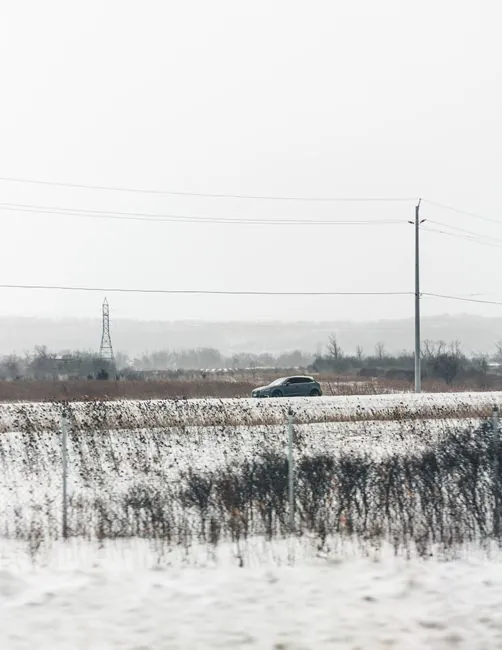
EV Cold Weather Ontario 2026: Range, Tires, and Winter Driving Tips
6 min read
EV cold weather performance in Ontario in 2026 — winter range loss, tire recommendations, charging strategy, and what Ontario drivers need to know about EV ownership in sub-zero temperatures.
The Charge Brief
Get Canada’s EV transition in your inbox
One email a day. No spam, unsubscribe anytime.