
infrastructure
chargingBC Hydro EV Charger Cable Thefts: Copper at $20.99/kg Is Stripping BC’s Fast-Charging Network
EV charging cable thefts are surging across Canada as copper hits an all-time high of $20.99/kg. B.C. Hydro has lost about $1 million and 130 cables since October; Hydro-Québec thefts more than doubled year-over-year. Here's what it means for Canadian drivers.
Copper theft has become the newest headache for Canada's EV charging network — and the numbers released today by CBC News show how fast it is growing. With copper trading at an all-time high of roughly $20.99 per kilogram earlier this month, thieves are cutting charging cables out of public stations across the country, costing utilities and charging operators more than $1 million in the past year.
B.C. Hydro says roughly 130 charging cables have been stolen across British Columbia since October 2025, running up a replacement bill of about $1 million. "These cables contain copper and they're highly valuable and traded metal, so that has unfortunately made them a target for theft," B.C. Hydro spokesperson Susie Rieder told CBC. "It's a broader industry-wide challenge across North America and EV infrastructure."
The numbers across Canada
The pattern repeats in every region CBC surveyed on August 31:
- B.C. Hydro: ~130 cables stolen since October 2025, about $1 million in replacement costs.
- Hydro-Québec: charging equipment and cable thefts more than doubled — from 9 incidents in the first half of 2025 to 20 in the same period of 2026. Replacing a stolen cable can cost tens of thousands of dollars per unit.
- Edmonton police: 14 reported copper-wire thefts from EV charging stations between January and July 2026, causing about $41,590 in damage — up from 12 incidents in the same period of 2025, and police believe the true count is higher because thefts go unreported.
Hydro-Québec says the economics of the crime are hard to understand: the copper inside a charging cable is worth "barely a few dozen dollars," while the theft destroys equipment worth thousands and puts the thief at risk of electrocution from live high-power hardware.
Why chargers are the new target
The price of copper — the highly conductive metal inside every EV charging cable — has been climbing steadily for years and peaked near $20.99 per kilogram in August 2026. Charging stations are attractive to thieves precisely because they are publicly accessible 24 hours a day, unattended, and plugged into the grid. The CBC report notes the thefts are the latest wrinkle in a nationwide wave of copper crime that has also hit phone equipment and power cables, at one point threatening internet, TV and even 911 access.
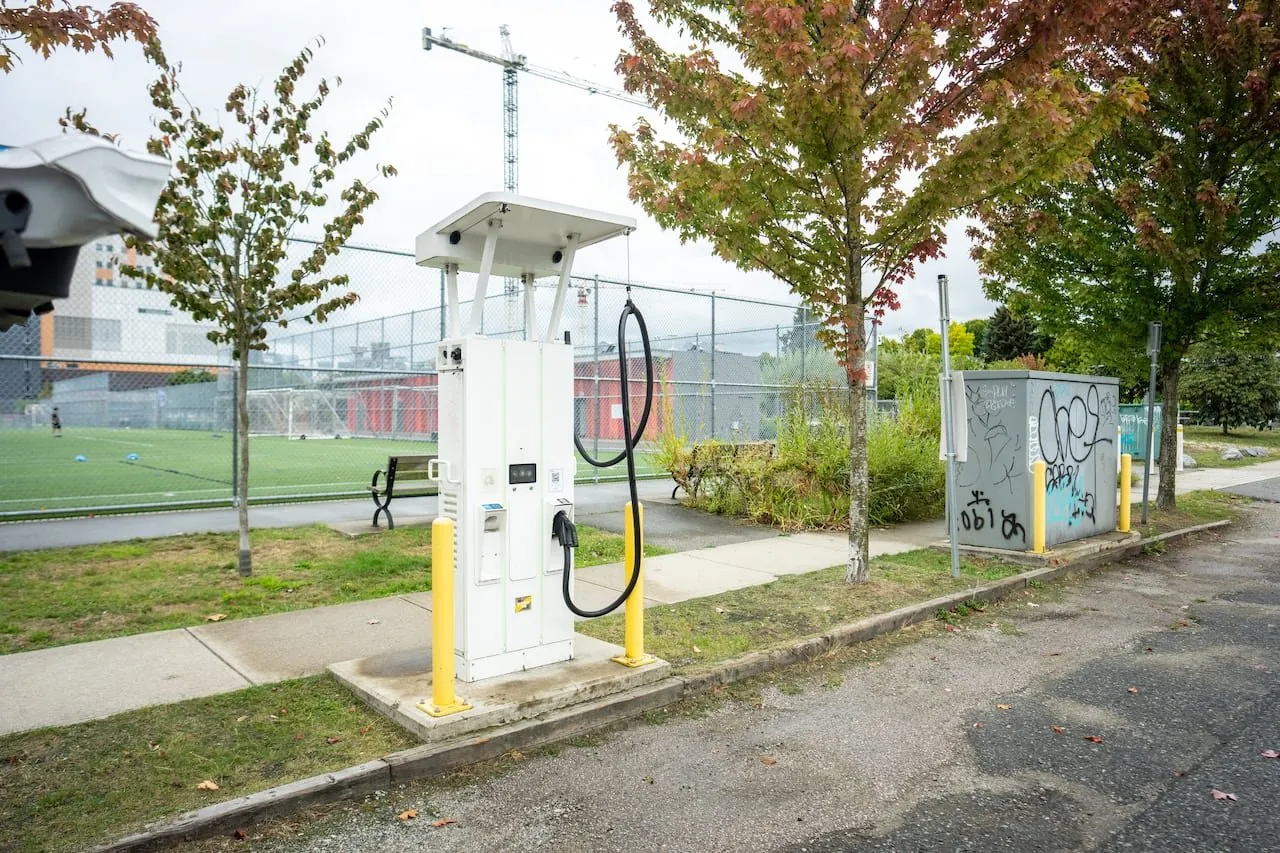
One Vancouver station at Trillium Park was among those stripped of its copper wiring, CBC reported — a visible sign of the problem in one of Canada's most EV-dense cities. The thefts come just as Canada pursues a national auto strategy targeting 90 percent electric vehicle adoption by 2040, making charger reliability a first-order policy concern.
What utilities are doing about it
B.C. Hydro says it has strengthened security at a number of sites with additional cameras, alarm systems, enhanced lighting, protective cable shields, dye-packed equipment cables and, at some locations, on-site security officers. Because the network is publicly accessible around the clock, the utility says there is no single solution — it is taking a targeted, site-by-site approach to local risk.
For drivers, the practical effect is a less reliable public network: a station with a cut cable is out of service until the operator replaces it, and replacement is neither cheap nor instant when thousands of dollars of hardware is involved. Reliability has already been the top complaint about public charging in Canada; cable theft adds a second, deliberate source of downtime on top of ordinary breakdowns and payment failures.
What to do if you find a damaged charger
- Don't touch cut or exposed cables — report the station in your charging app or to the network operator so it can be flagged out of service.
- Treat any visibly stripped station as live equipment: damaged high-power hardware can remain dangerous even when it looks dead.
- Check the station's status in the app before road-tripping through areas with known theft activity, and keep a backup network's app installed.
The copper price that motivates the thefts shows no sign of retreating, which means charger security spending is likely to keep rising alongside it — a hidden cost of building out Canada's public charging network that few buyers factor into the EV transition.
Looking for EV deals, insurance, or financing? Check out our partner deals and offers.
If you found this guide helpful, use our Tesla referral link for free Supercharging credits on a new Tesla purchase or lease in Canada.

Next story · swipe left
Next story
Polestar Posts Record Q3 Sales but Growth Slows Outside the U.S.
4 min read
Polestar delivered 14,371 vehicles in Q3 2026, up 1% year-over-year, but sales outside the U.S. fell 8% as the brand prepares to exit the American market in 2027.
The Charge Brief
Get Canada’s EV transition in your inbox
One email a day. No spam, unsubscribe anytime.