
Ford 'Dead Against' Chinese EV Kits at Brampton: Stellantis–Leapmotor Talks Draw Ontario's Line
Ontario Premier Doug Ford says he'll oppose any Stellantis deal to build Leapmotor EVs in Brampton using Chinese knockdown kits, calling it a threat to auto workers. Industry Minister Mélanie Joly says new auto investments must prioritize Canadian labour and parts — while Unifor raises 'serious concerns.'
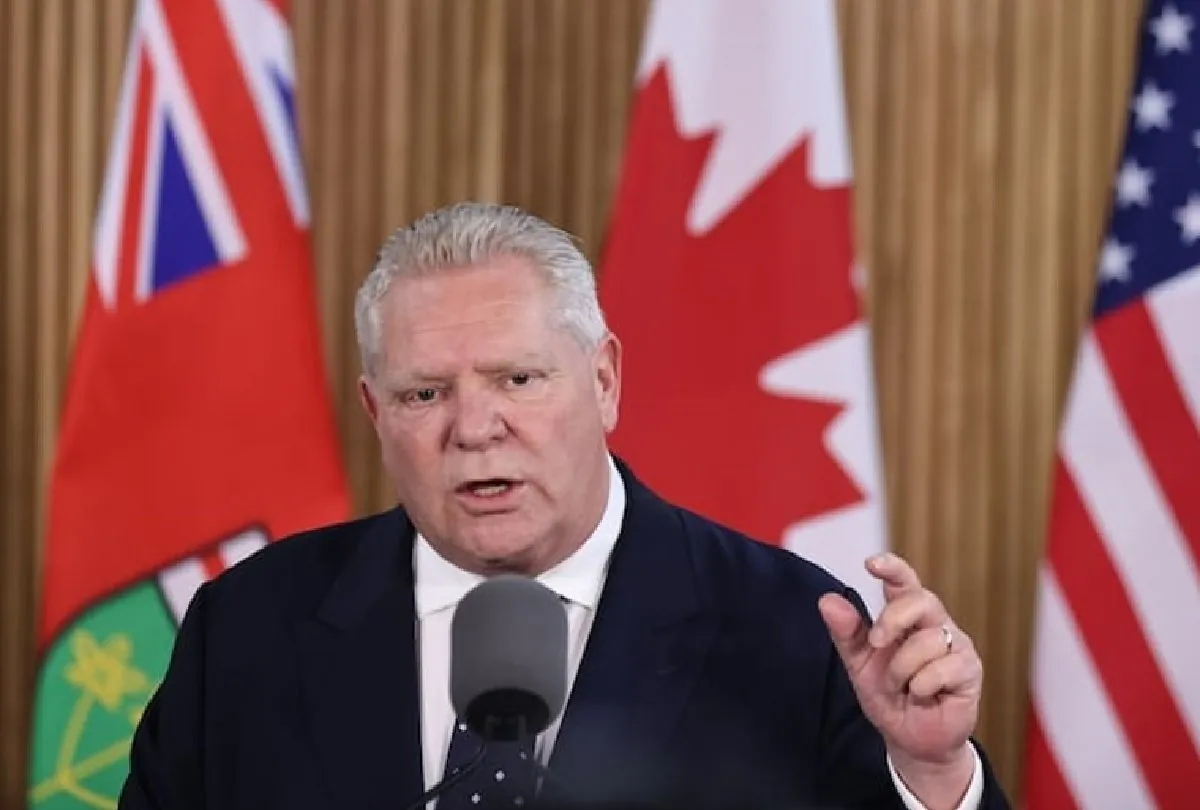
Ontario Premier Doug Ford says he will oppose any deal between Stellantis and China's Zhejiang Leapmotor Technology to build electric vehicles in his province unless the automakers commit to buying local parts. The premier's comments, made in an interview late Wednesday during a trade mission to Dallas and reported by EnergyNow, land on talks that Bloomberg News says focus on the idled Stellantis factory in Brampton, Ontario.
"Knockdown kits" are the flashpoint
Ford assailed the potential use of "knockdown kits" — vehicles largely built in China, then shipped overseas for final assembly. "If they're bringing kits over made in China, all that does is undermine every single auto worker we have in Ontario," Ford said. "I am dead against it."
The talks are at an early stage, according to Bloomberg's sources. Stellantis has been discussing the Brampton plant's future with federal Industry Minister Mélanie Joly, who said in a statement that "any new auto investments will prioritize Canada's supply chain, including Canadian labour and parts suppliers."
Unifor: kits would employ a fraction of the workforce
Unifor, the union representing workers at the Brampton plant, said it would have "serious concerns" about a partnership with a Chinese firm, noting that knockdown-kit assembly would only employ a small fraction of the workers a full production line supports. Ford echoed that line, saying he would welcome an investment geared toward a fully functioning factory that depends on local parts.
"What I do have a problem is when we get undermined and auto workers get undermined by cheap Chinese parts and vehicles," the premier said.
Why this is happening now
The prospect of Chinese-led vehicle production in Canada shows the ripple effects of U.S. President Donald Trump's tariffs on foreign-made vehicles, which have disrupted the integrated North American auto sector and cost automakers billions. Ontario is home to all of Canada's automotive assembly plants, which produced roughly 1.2 million vehicles last year — most of them exported to the United States — even as the traditional Detroit automakers have pulled back on Canadian production.
For Canadian EV shoppers, the Brampton question is the manufacturing mirror of the import story: Chinese-brand EVs are already entering Canada under the new quota framework, and now the debate is whether any of them will be bolted together here — and on whose terms.
Looking for EV deals, insurance, or financing? Check out our partner deals and offers.
If you found this guide helpful, use our Tesla referral link for free Supercharging credits on a new Tesla purchase or lease in Canada.
Next story · swipe left
Next story
Hydro-Québec Wants to Triple Wind Power — and a Coalition Is Marching for a Moratorium
4 min read
Several hundred protesters marched in Quebec City on September 7 demanding a moratorium on new wind projects and a province-wide BAPE hearing, as Hydro-Québec's plan to triple wind capacity becomes the largest near-term piece of its supply buildout for EVs and electrification.
The Charge Brief
Get Canada’s EV transition in your inbox
One email a day. No spam, unsubscribe anytime.