
infrastructure
chargingOne Year In, the N.W.T.'s Yellowknife–Alberta EV Charging Corridor Is Quietly Working
One year after the Northwest Territories completed its Yellowknife–Alberta EV charging corridor, utilities report 194 charging sessions and 6,182 kWh sold at NTPC sites — while Yellowknife plans new chargers under its Climate Action Plan and World EV Day puts northern electrification in focus.
Sept. 9 marks World EV Day — and in the Northwest Territories, it also marks one year since the territorial government completed its EV charging corridor between Yellowknife and the Alberta border. The milestone is a useful checkpoint on a question the North has circled for years: are charging investments worth it with so few users, or are there so few users because the infrastructure isn't there yet?
New usage figures reported by CBC North suggest the corridor is being used — modestly, but at a pace that surprised the utilities operating it. And in Yellowknife, the city is moving to expand charging as part of its Climate Action Plan after determining that roughly 20 per cent of its emissions come from transportation.
What one year of usage looks like
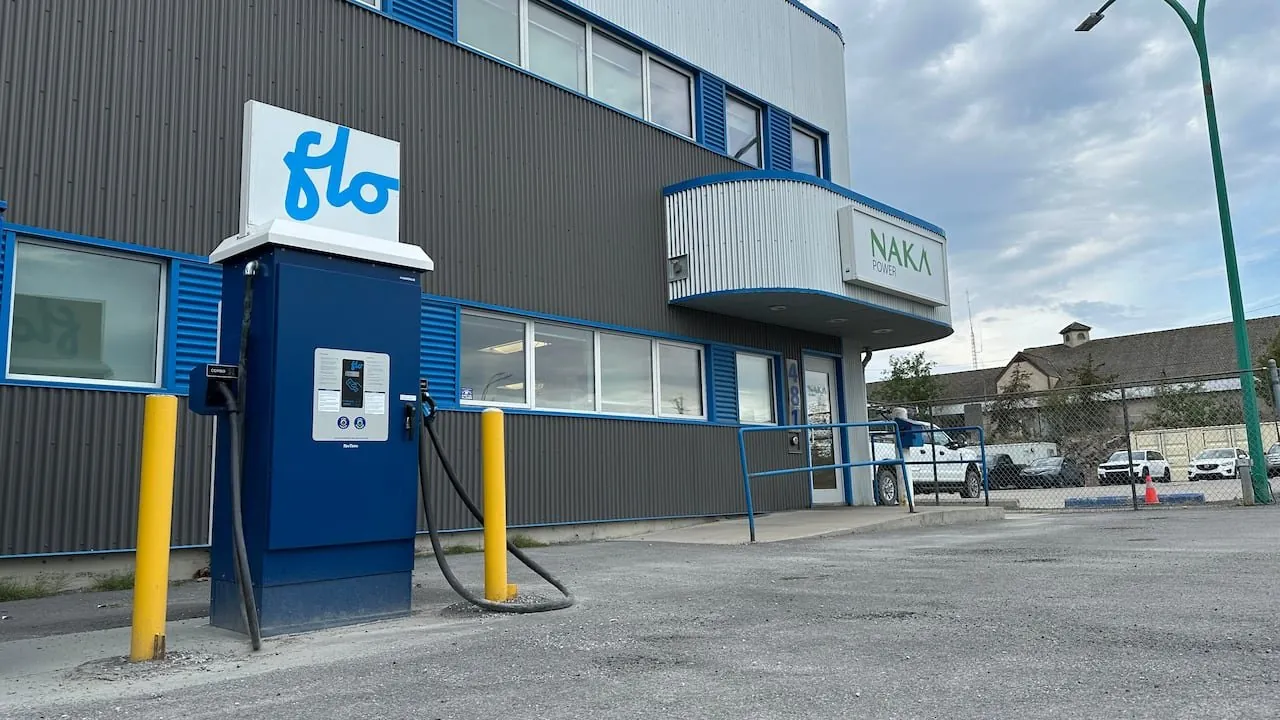
Chargers along the corridor are split between two operators. Naka Power Utilities manages stations in Yellowknife, Fort Providence and Enterprise, while the Northwest Territories Power Corporation (NTPC) runs those in Behchokǫ̀, Hay River and Fort Smith.
According to figures the two utilities provided to CBC North:
- NTPC recorded 194 charging sessions across its three stations from Jan. 1, 2025 to Aug. 17, 2026, selling a total of 6,182 kWh.
- Naka Power's 2026 year-to-date numbers: 34 sessions in Enterprise, 22 at its Yellowknife office, and 41 at the Prince of Wales Northern Heritage Centre.
- In Fort Providence, 34 sessions were counted since April 2026 — when the station finally became reliable enough for public use.
"We were really surprised with the amount of uptake we've seen in EVs across the territory," Jason Yorke, Naka's manager of operations, told CBC. But he was candid that current volumes don't translate into financial stability without territorial government funding: "I wouldn't say they're going to be making us a ton of money right now, but it is supporting that EV industry in the North and giving that gateway to the South."
Yellowknife's next moves — and its Sept. 12 symposium
Charlsey White, the City of Yellowknife's director of planning and development, says the feedback the city hears is double-edged: "there's not enough [chargers], where people are sitting there for too long. But that tells me people are using them and that there is a need for more."
The city is planning to install EV chargers as part of new construction projects under its Climate Action Plan, and is hosting a symposium on Sept. 12 to help residents familiarize themselves with EV technology and its use in the North.
Local drivers want chargers placed where dwell time already exists. Jeremy Armitage, a Yellowknife hybrid owner who switched after his combustion car broke down on the drive home following the 2023 evacuation, told CBC he'd like to see chargers around grocery stores — "locations where you're not staying for five minutes."
The grid is the real constraint
The territory's small, isolated electric grids are the binding constraint on expansion, Yorke said. In Fort Providence, Naka had to get creative: the charging station runs off a battery rather than a direct grid connection, because a charging spike "can have a big impact and that could have other impacts to other customers."
The long-drive south remains the psychological barrier. In 2025, former Yellowknife resident Shaun Robertson completed two northern road trips in a Tesla Model Y — Vancouver to Yellowknife, then the Dempster Highway to the Arctic Ocean — and came away noting the Yukon has been "kind of leading the charge" on EV infrastructure. "I wish the N.W.T. would have as good of an infrastructure as their neighbour," he said. He also waited out a wildfire highway closure near his point of no return, carrying a backup battery — the kind of scenario northerners weigh that southern drivers rarely do.
Next on the territory's list: a charging station at Buffalo Junction, though the government is still looking for funding to complete that project.
Why it matters for the rest of Canada
Northern charging economics are the sharpest version of a question every Canadian province faces: corridors with low population density live or die on public funding until usage compounds. The N.W.T.'s first-year numbers — a few hundred sessions across six communities — are small, but they're real, measured, and growing. For EV policy watchers, the corridor is a live experiment in whether "build it and they will come" holds at -30°C.
Looking for EV deals, insurance, or financing? Check out our partner deals and offers.
If you found this guide helpful, use our Tesla referral link for free Supercharging credits on a new Tesla purchase or lease in Canada.
Next story · swipe left
Next story
Tesla Canada Gets a New Country Manager After a Year Without One
3 min read
Michelle Veenhuizen has been promoted to Country Manager for Tesla Canada Sales & Delivery, filling the role left vacant since Fereshteh Zeineddin's 2025 departure. What the retail-background pick signals for Canadian buyers.
The Charge Brief
Get Canada’s EV transition in your inbox
One email a day. No spam, unsubscribe anytime.