Tesla's California Virtual Power Plant Hit 507 MW From 68,887 Homes — Why That Matters for Canadian Grids
Tesla's California virtual power plant delivered 507 MW to the grid during a September heatwave from 68,887 participating Powerwall homes — output comparable to a conventional power plant. The network has grown from 7,000 homes in 2023 to more than 105,000, with Tesla paying nearly US$10 million to participants in 2024.
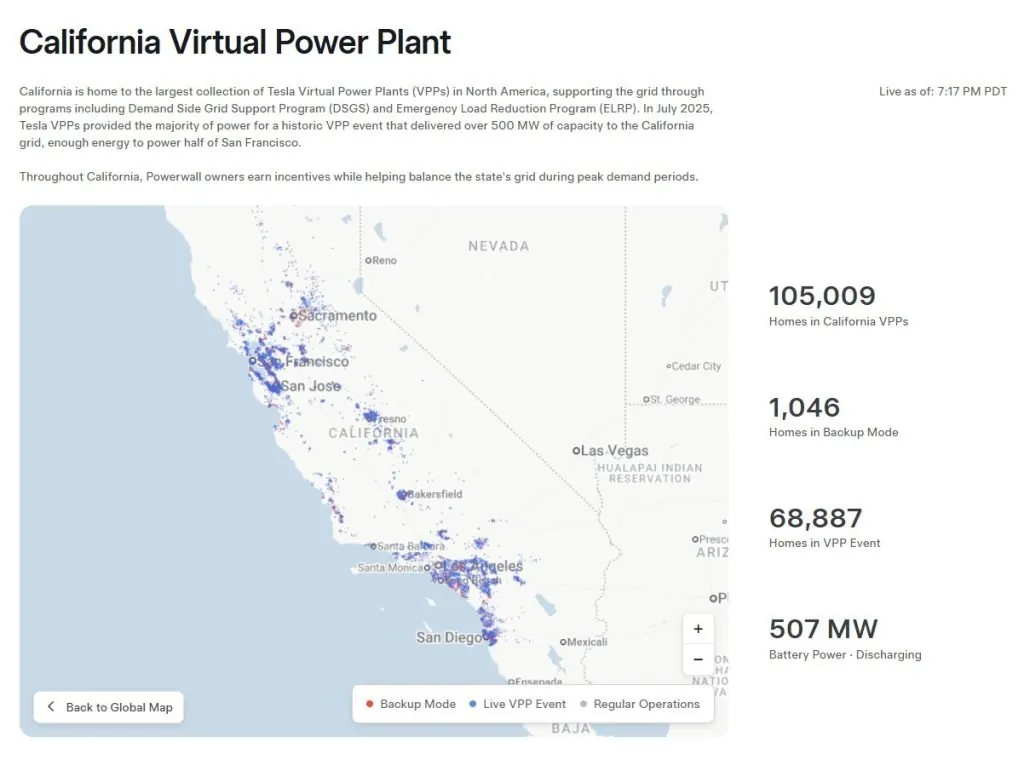
Tesla Powerwall owners across California combined to push more than 500 megawatts of electricity back into the grid on Wednesday, as the state leaned on home batteries during a heatwave. According to Tesla Energy figures reported by Drive Tesla Canada, the virtual power plant (VPP) event peaked at 507 MW from 68,887 participating homes — output the company compares to a conventional power plant.
The numbers, visible on Tesla's live VPP dashboard, mark the largest single-event milestone yet for a program that has scaled at a remarkable pace. Another 1,046 homes were in Backup Mode during the event, and Tesla's California VPP network has now grown to more than 105,000 homes overall — up from just over 7,000 participating customers in 2023.
What a VPP actually does
A virtual power plant is exactly what Wednesday's event demonstrated: thousands of home batteries, each individually small, orchestrated through software to discharge together when the grid is under strain. During peak heatwave demand, participating Powerwalls feed electricity back through the meter, reducing the need for utilities to fire up peaker plants or import expensive power.
For utilities, the draw is capacity without construction. As Drive Tesla Canada noted, Wednesday's 507 MW event shows residential batteries can now provide power at a scale comparable to a traditional power plant — without having to build one. California is Tesla's largest VPP market in North America, with Powerwall owners participating through programs including the Demand Side Grid Support Program (DSGS) and the Emergency Load Reduction Program (ELRP).
Owners get paid
Participation isn't charity. Tesla revealed last year that it paid nearly US$10 million to Powerwall owners across its VPP programs in 2024, giving homeowners a revenue stream from a battery many bought primarily for blackout protection.
Why this matters in Canada
The Canadian grid faces the same physics with sharper edges. Summer heatwaves are now a peak-demand problem in Ontario and Quebec, and winter cold snaps — when heating demand surges and battery performance dips — are the harder test. Provincial utilities have run distributed-storage pilots, but nothing at the scale of a 105,000-home network delivering half a gigawatt on call.
The barrier in Canada has been structural more than technical: most provinces have regulated electricity markets where home batteries exporting to the grid fit awkwardly, and the virtual power plant programs that do exist have been small pilots rather than mass-market programs. Tesla sells Powerwall here bundled with solar, but Canadian owners cannot yet enroll in anything resembling California's DSGS-scale revenue program.
Wednesday's number changes the conversation because it removes the "does this scale" question. A distribution utility in Alberta facing peak strain, or an Ontario regulator weighing avoided infrastructure spend, now has a live, production-grade reference point: 69,000 homes, one event, half a gigawatt. The technology question is answered — what remains is the market design to let Canadian batteries do the same job.
Looking for EV deals, insurance, or financing? Check out our partner deals and offers.
If you found this guide helpful, use our Tesla referral link for free Supercharging credits on a new Tesla purchase or lease in Canada.
Next story · swipe left
Next story
Wallbox Closes US Charger Plant, Moves Production to Barcelona — Canada Already Affected
4 min read
Spanish EV charger maker Wallbox is shutting its Arlington, Texas factory and relocating to Barcelona amid debt restructuring. AC chargers for Canada were already moved to Spain months ago, and US-made home chargers are now being withdrawn too.
The Charge Brief
Get Canada’s EV transition in your inbox
One email a day. No spam, unsubscribe anytime.