
technology
Waymo to End Uber Partnership in Austin and Atlanta by January 2028
Waymo co-CEO Tekedra Mawakana confirms the company will exit its exclusive Uber deal in two major U.S. cities, citing inconsistent rider experiences and a move to full app control.

Waymo has confirmed it will end its exclusive robotaxi partnership with Uber in Austin and Atlanta starting in January 2028, according to co-CEO Tekedra Mawakana in a Wednesday interview with Bloomberg. From that point forward, riders in both cities will access Waymo's driverless service through the company's own dedicated app — the same model already used in more than two dozen other U.S. cities where Waymo operates.
Why the partnership is ending
Mawakana described the original Uber arrangement as "a little bit of a crapshoot." The core problem: when a rider requests an autonomous ride through the Uber app, the system only dispatches a Waymo vehicle if one is physically nearby. If no robotaxi is in range, the rider is matched with a human-driven car instead — meaning there was no guarantee a driverless experience would actually materialize.
Uber reportedly offered to create a dedicated robotaxi ride option within its platform that would preferentially match riders with Waymo vehicles, but Waymo declined. Mawakana said customers were increasingly demanding a consistent, predictable experience — one that only Waymo's standalone app could guarantee.
What it means for the robotaxi race
- Waymo scale: The company currently conducts over 500,000 paid driverless trips per week and operates in 15 U.S. cities, with plans to add more than a dozen additional markets in the coming months. Its fleet targets 20,000 vehicles by end of 2027.
- Uber's counter-move: Uber plans to have 700 robotaxis on its platform by the end of 2026 and 2,000 by end of 2027, with partners including Rivian, Lucid, Wayve, Zoox, and Motional. Around half of those 2,000 vehicles will serve the U.S.; the rest will be split across Europe, Asia, and the Middle East.
- Capital: Uber disclosed on its Q3 earnings call that it is committing $10 billion to its autonomous-vehicle strategy. The company noted it may bring in third-party capital once its fleet exceeds 10,000 vehicles.
- Canadian angle: Waymo has already confirmed a Toronto launch for 2028 and is lobbying Alberta regulators for a Calgary entry. The Austin/Atlanta split signals Waymo's confidence in its standalone app model — a model it will likely replicate for Canadian cities.
What's next
The split transforms Uber from a distribution partner into a direct competitor in Austin and Atlanta. With Waymo already far ahead in operating scale — roughly 4,000 vehicles on the road versus Uber's target of 2,000 by year's end — the next two years will determine whether Uber's multi-partner strategy can close the gap or whether Waymo's first-mover advantage becomes insurmountable.
Looking for EV deals, insurance, or financing? Check out our partner deals and offers.
If you found this guide helpful, use our Tesla referral link for free Supercharging credits on a new Tesla purchase or lease in Canada.
Next story · swipe left
Next story
Mercedes-Benz Sells European EV Charging Network to Electra in €99M Deal
4 min read
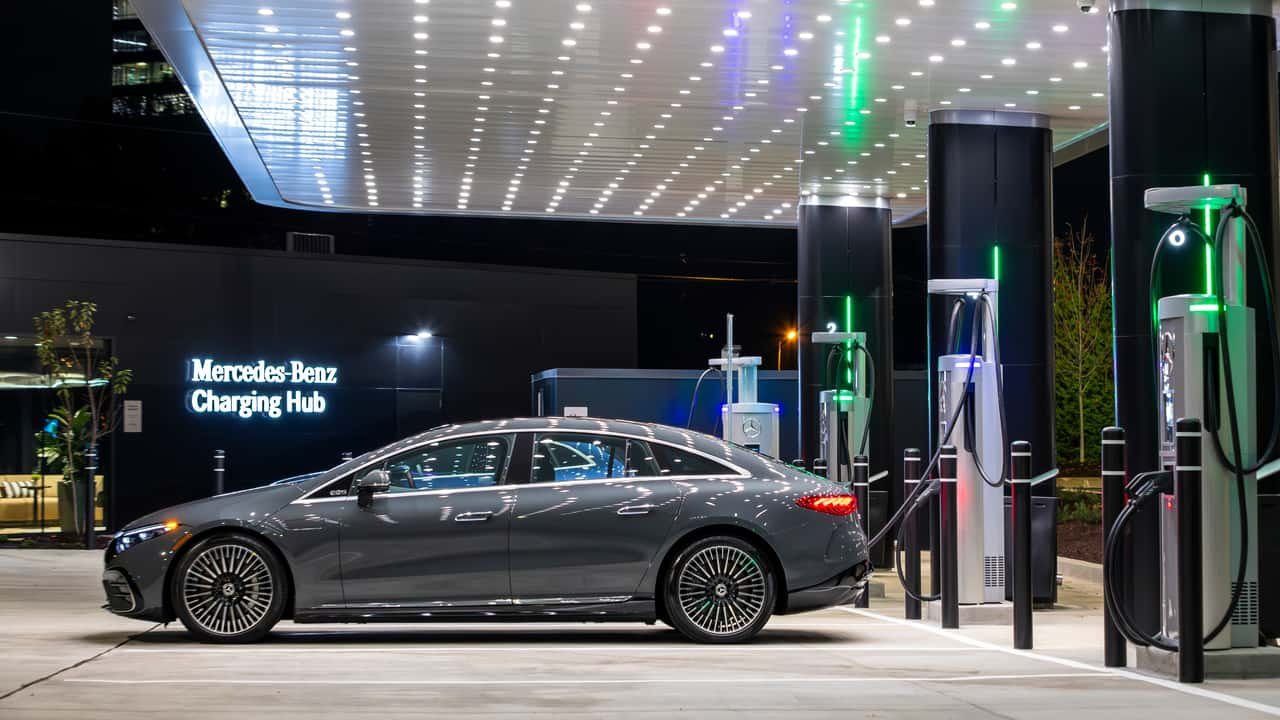
Mercedes-Benz has sold its 374-port European fast-charging network to French operator Electra, shifting to a partner-only charging strategy on the continent.
The Charge Brief
Get Canada’s EV transition in your inbox
One email a day. No spam, unsubscribe anytime.