
technology
teslaTesla Cybercab Test Fleet Expands to Detroit, Joining Waymo in Michigan's Autonomous Rideshare Race
Two dozen Tesla Cybercabs spotted testing on Detroit-area roads, joining Waymo's driverless operations. The expansion signals Tesla's push into multi-season, complex urban autonomous driving.

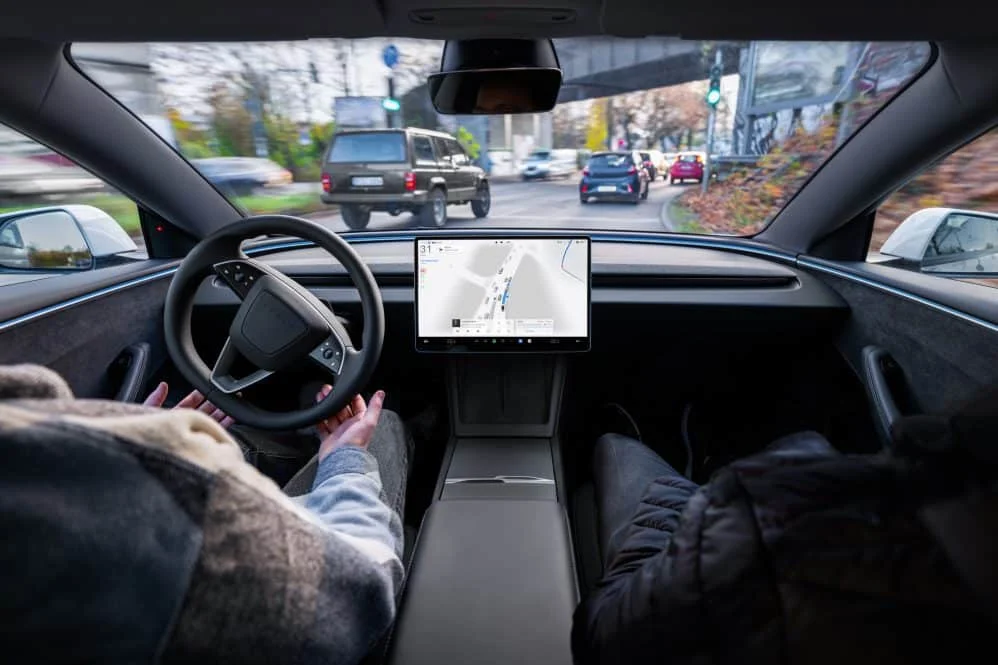
Tesla's autonomous vehicle ambitions are entering a new phase. A fleet of approximately 20 Cybercab prototypes has been spotted testing on major roads in Metro Detroit, including I-696, M-10, Telegraph, and Eight Mile, according to The Detroit News. The vehicles are operating out of Tesla's Southfield collision repair facility and are being driven with temporary steering wheels while the company validates its camera-only autonomy stack in a complex, multi-season urban environment.
What the Detroit deployment means
The move to Detroit is strategically significant for three reasons. First, it places Tesla in direct competition with Waymo, which began fully autonomous testing in the region this past October using its Zeekr Ojai electric minivans. Second, Michigan's climate — with its harsh winters — provides a stress test for Tesla's vision-based sensor approach that is far more demanding than the mild conditions of Austin or Phoenix. Third, Detroit's dense, grid-like street layout presents a fundamentally different challenge than the freeways and suburban arterials where Tesla's Robotaxi service has operated to date.
Tesla's Robotaxi service currently operates in Austin, Dallas, and Houston in Texas, plus Tampa and Miami in Florida, with over 4 million miles logged. The company has not confirmed a timeline for public Detroit service, and Tesla's lack of a public relations division means no official comment was available.
Camera-only vs. LiDAR: the Detroit test
The Detroit deployment highlights the central technical debate in autonomous vehicles. Tesla's Cybercab relies exclusively on cameras, while Waymo's vehicles use a combination of LiDAR, radar, and cameras. Stephanie Brinley, associate director for automotive intelligence at Mobility Global, noted that "the expansion of autonomous rideshare testing in different weather situations in different cities is important for developing the technology," while acknowledging that "Tesla has not officially said that they're testing here, so hard to say what they're specifically doing."
| Factor | Tesla Cybercab | Waymo (Detroit) |
|---|---|---|
| Sensors | Cameras only | LiDAR + radar + cameras |
| Vehicle | Two-seat Cybercab, 48 kWh battery | Zeekr Ojai EV minivan |
| Range | ~300 miles | Not disclosed |
| Status | Testing with safety drivers | Fully autonomous (no driver) |
| Miles logged | 4M+ (all markets) | 270M (all markets) |
Source: The Detroit News.
What Canadian drivers should watch
- Winter testing is the next milestone: Detroit's climate makes it one of the first major North American cities where a camera-only system must handle snow, ice, and low-visibility conditions. Success here would be a strong signal for Canadian deployment.
- Waymo is already planning snowbelt expansion to Denver, Minneapolis, Chicago, and Montreal — a city where Canadian commuters could face direct competition from a fully autonomous service within a few years.
- The Cybercab is a two-seat vehicle (11 inches shorter than a Model 3, 4 inches narrower), suggesting Tesla is targeting urban ride-hailing rather than family transport. This shapes the charging and parking infrastructure needs for Canadian cities.
- No Canadian timeline yet: Tesla has not announced any plans for Robotaxi or Cybercab deployment in Canada. The Detroit test is a U.S. regulatory and technical exercise, but performance data will inform future market entry decisions.
Looking for EV deals, insurance, or financing? Check out our partner deals and offers.
If you found this guide helpful, use our Tesla referral link for free Supercharging credits on a new Tesla purchase or lease in Canada.
Next story · swipe left
Next story
EV Road Trip Canada 2026: Best Routes, Charging Stops and Winter Tips
7 min read
Plan an EV road trip across Canada in 2026 — best routes, charging networks, winter preparation, and real owner tips for long-distance electric driving.
The Charge Brief
Get Canada’s EV transition in your inbox
One email a day. No spam, unsubscribe anytime.