infrastructure
Nova Scotia's Grid Operator Opens a Technology-Neutral Hunt for Batteries — Gas Plants No Longer the Only Option
IESO Nova Scotia will launch a request for qualifications in October open to battery storage and any on-demand generation, running in parallel with its contested Pictou County gas-plant procurement. The province NERC says is the only region in North America with elevated reliability risk.
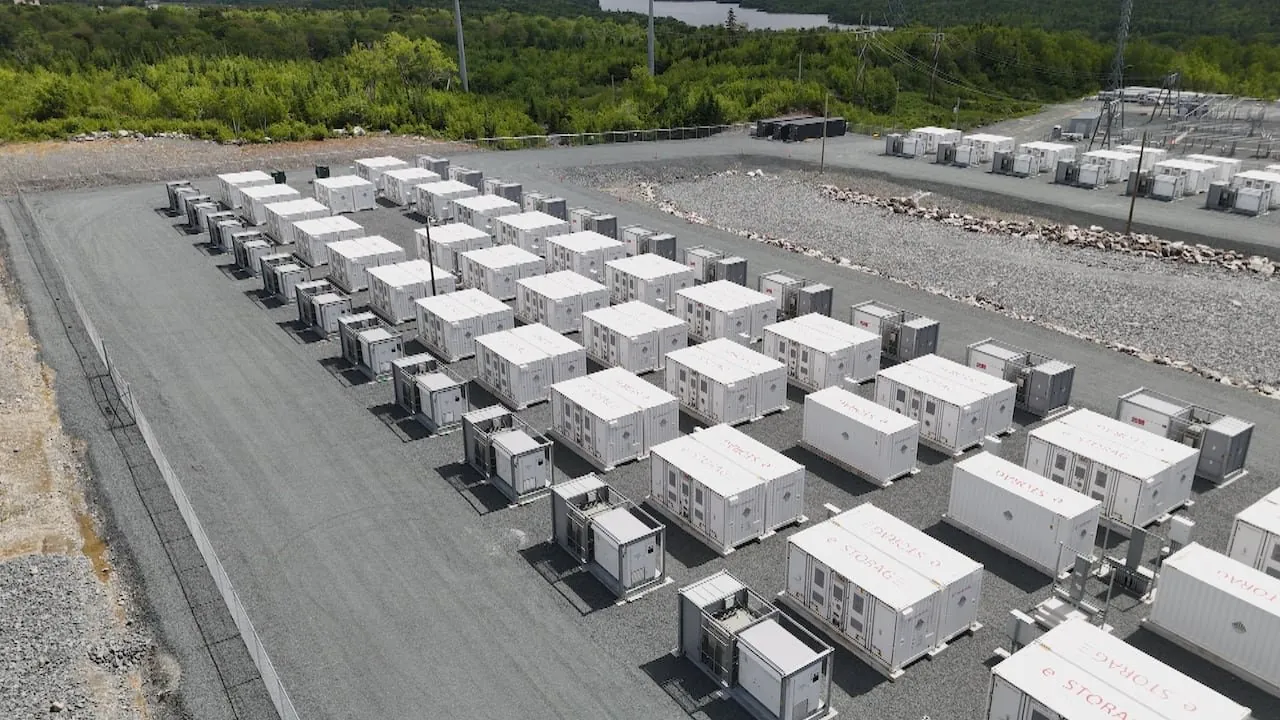
Nova Scotia's grid operator is changing course. The Independent Energy System Operator (IESO) announced September 11, 2026 that it will launch a technology-neutral request for qualifications (RFQ) in October — open to battery storage and any on-demand electricity generation technology — running in parallel with its contested procurement for fast-acting natural gas plants in Pictou County.
The move matters beyond Nova Scotia. In its 2026 State of Reliability report, the North American Electric Reliability Corp. (NERC) identified Canada's Maritime region, including Nova Scotia, as the only region on the continent with elevated reliability risks. How the province solves its on-demand power problem — batteries, gas, or a mix — is a live test of the same coal-phase-out math most Canadian grids now face.
What is actually being procured
- The new RFQ: launches October 2026 with submissions due January 2027. It seeks proponents' technology, locations, performance, project readiness and pricing, and is open to any storage or on-demand generation that can meet peak demand and back up renewables.
- The existing gas procurement: the RFP for one or two 300-megawatt fast-acting natural gas plants at Salt Springs and Marshdale in Pictou County — issued July 10 — continues, but its deadline was extended to January 21, 2027.
- The stated need: 300 to 600 megawatts of fast-acting capacity, identified in the province's Clean Power Plan and the last two Integrated Resource Plans.
Why the timeline accelerated
The energy-storage procurement was initially planned to launch at the end of 2026. It was moved up and broadened after Premier Tim Houston — who had previously backed the gas-only approach — said in early September he wanted the grid operator to consider other technologies. Opposition leaders noted the pivot came only after the premier's change of heart, with interim Liberal Leader Iain Rankin telling CBC the operator has a "veneer of independence," and NDP Leader Claudia Chender calling for transparency about communications between the premier's office and the IESO.
IESO president and CEO Johnny Johnston rejected the idea the decision was politically directed: "We always have a mandate to align with government policy," he told CBC, "but really today's announcement comes from months of engagement and feedback with the local community."
The reliability math behind it
The stakes are concrete. Coal still supplies about 40 per cent of Nova Scotia's electricity today, and provincial law eliminates it by 2030 — the same year 80 per cent of generation must come from renewables like wind, which do not produce on demand. Low-wind periods can last for days, and the IESO says new on-demand resources are needed to prevent rotating outages through that transition.
Batteries are the leading challenger technology. Nova Scotia already has three grid-scale battery facilities, and they charge when wind and solar produce a surplus, then discharge when the grid needs power. Community group LEAP (Living Ecosystems And Power), which opposes the Pictou gas plants, says other provinces chose storage on price: "There is a reason other provinces have gone with battery storage considering the cost of gas generating plants versus battery storage — there is a major difference in price," spokesman Mark Brennan told the Pictou County Advocate.
What happens next
The IESO says information from the October RFQ will inform the parallel gas-plant decision — including whether any gas plants are built at all. "Not having enough electricity to power Nova Scotians' businesses, homes, schools, and healthcare is not an option," Johnston said in the announcement. "The coordinated procurement approach we are announcing today strikes the right balance between addressing Nova Scotia's critical electricity reliability needs and ensuring we make the most cost-effective decisions on behalf of Nova Scotians."
For EV drivers in the region, the outcome is directly relevant: more grid-scale storage means more low-cost renewable electricity available overnight and at peak — the hours when most home charging happens. Grid batteries are already proving they can deliver power-plant-scale output elsewhere on the continent, as Tesla's 507 MW virtual power plant event demonstrated.
Looking for EV deals, insurance, or financing? Check out our partner deals and offers.
If you found this guide helpful, use our Tesla referral link for free Supercharging credits on a new Tesla purchase or lease in Canada.

Next story · swipe left
Next story
Only 35% of Canadians Supported EV Sales Quotas — the Poll Behind the Mandate Repeal
5 min read
A federal Ekos Research poll of 3,035 Canadians finds just 35% supported the 100% zero-emission vehicle sales mandate, with 49% opposed and opposition peaking at 63% in Alberta. The survey, commissioned by Natural Resources Canada for $70,759, surfaced weeks before Cabinet served notice of repeal on Aug. 15.
The Charge Brief
Get Canada’s EV transition in your inbox
One email a day. No spam, unsubscribe anytime.