infrastructure
powerFord Fathom to Deliver 10 kW Home Power via BC Hydro Partnership — No External Inverter Needed
Ford Fathom electric pickup (C$42,690) will offer built-in bidirectional charging, delivering 10+ kW to homes without a wall-mounted inverter. BC Hydro and four other utilities are working on interconnection standards.

Ford has confirmed the Fathom electric pickup will ship with built-in bidirectional charging, capable of delivering over 10 kW of AC power to a home starting in 2027 — all without a separate wall-mounted inverter. The truck, priced from C$42,690 before incentives in Canada, will be the first EV from a U.S. automaker under US$30,000 MSRP to offer this capability.
Bidirectional charging, built in
The technology stems from Ford's 2023 acquisition of Auto Motive Power. Rather than bolting on a separate inverter, Ford's engineers integrated the two-way charging hardware directly into the truck's E-box — one of five main modules in the Fathom's Universal EV Platform architecture.
For homeowners, Ford expects its new Home Power Station to cost roughly half what its original two-way charger did. Paired with the Home Backup Power Panel, backup power during outages should run at least 60% cheaper than the company's first backup setup.
Utility partnerships
With over 3,000 utilities across North America each enforcing different interconnection rules, Ford formed a working group in July 2026 with five utilities:
- BC Hydro (British Columbia)
- American Electric Power (Ohio/Indiana region)
- Consumers Energy (Michigan)
- Exelon (Illinois/Mid-Atlantic)
- Pacific Gas and Electric (California)
The group is working to establish more consistent interconnection requirements before the Fathom's 2027 launch. The system is being designed to meet UL 1741 and IEEE 1547 standards, using the SAE J3068 protocol to reduce charging equipment costs.
What it means for Canadian homeowners
In British Columbia, BC Hydro's existing guidelines generally allow isolated home backup power without utility coordination. However, systems operating alongside the grid require an interconnection application, and sending electricity back to the grid must follow additional guidelines. Ford's position: interconnection approval should only be necessary when a vehicle runs connected alongside the grid, not during normal charging or isolated backup.
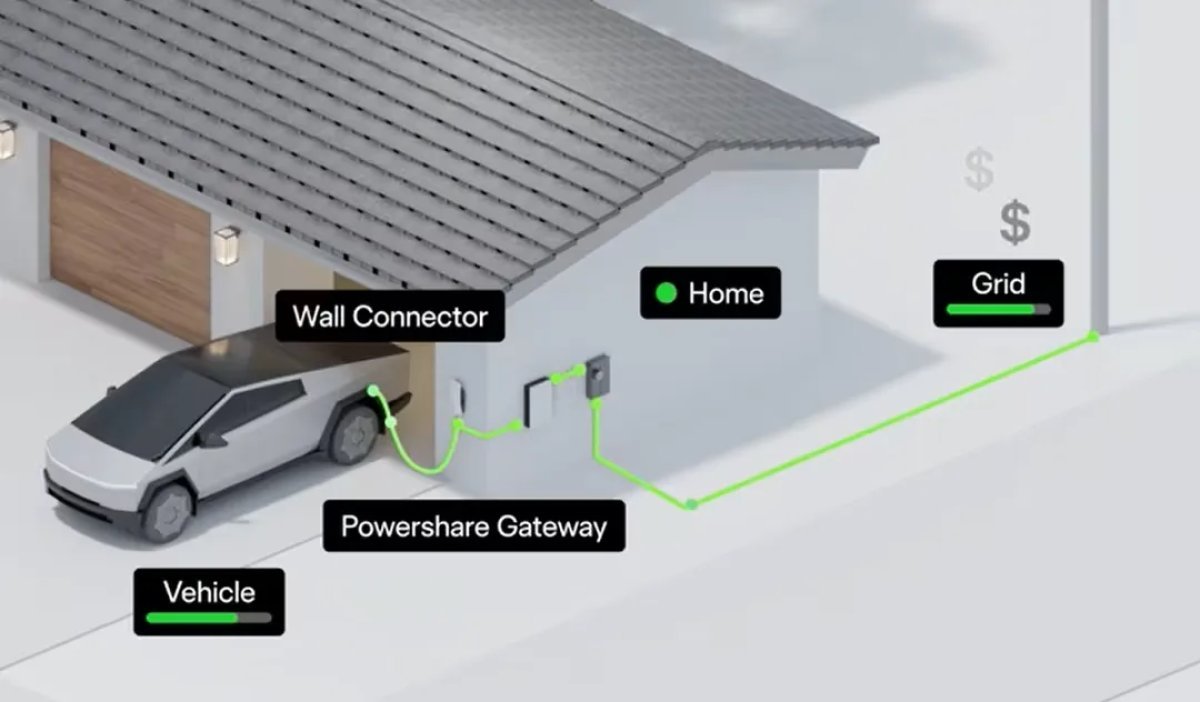
For Canadian drivers in other provinces, the Fathom's bidirectional capability could enable V2H (vehicle-to-home) backup power and, eventually, V2G (vehicle-to-grid) services once utility interconnection standards align.
Looking for EV deals, insurance, or financing? Check out our partner deals and offers.
If you found this guide helpful, use our Tesla referral link for free Supercharging credits on a new Tesla purchase or lease in Canada.
Next story · swipe left
Next story
Tesla Software Update 2026.38.5.1 Breaks Third-Party V2L Devices
4 min read
Owners on the Tesla Motors Club report that software update 2026.38.5.1 disables third-party vehicle-to-load adapters from Elejoy and others. The car throws a BMS_a076 fault and cuts out after 3-20 minutes. Tesla's own Powershare is expanding across the lineup at the same time.
The Charge Brief
Get Canada’s EV transition in your inbox
One email a day. No spam, unsubscribe anytime.