infrastructure
chargingBurlington Ends 11 Years of Free EV Charging Oct. 1 — and the Hourly Rates Have a Winter Problem
The City of Burlington will charge EV drivers at its 49 municipal stations starting Oct. 1 — $2/hour downtown Level 2, $10/hour Level 3 — ending more than a decade of free electricity. EV Society's national director says hourly billing lets a January driver pay twice as much as a July driver for the same charge.
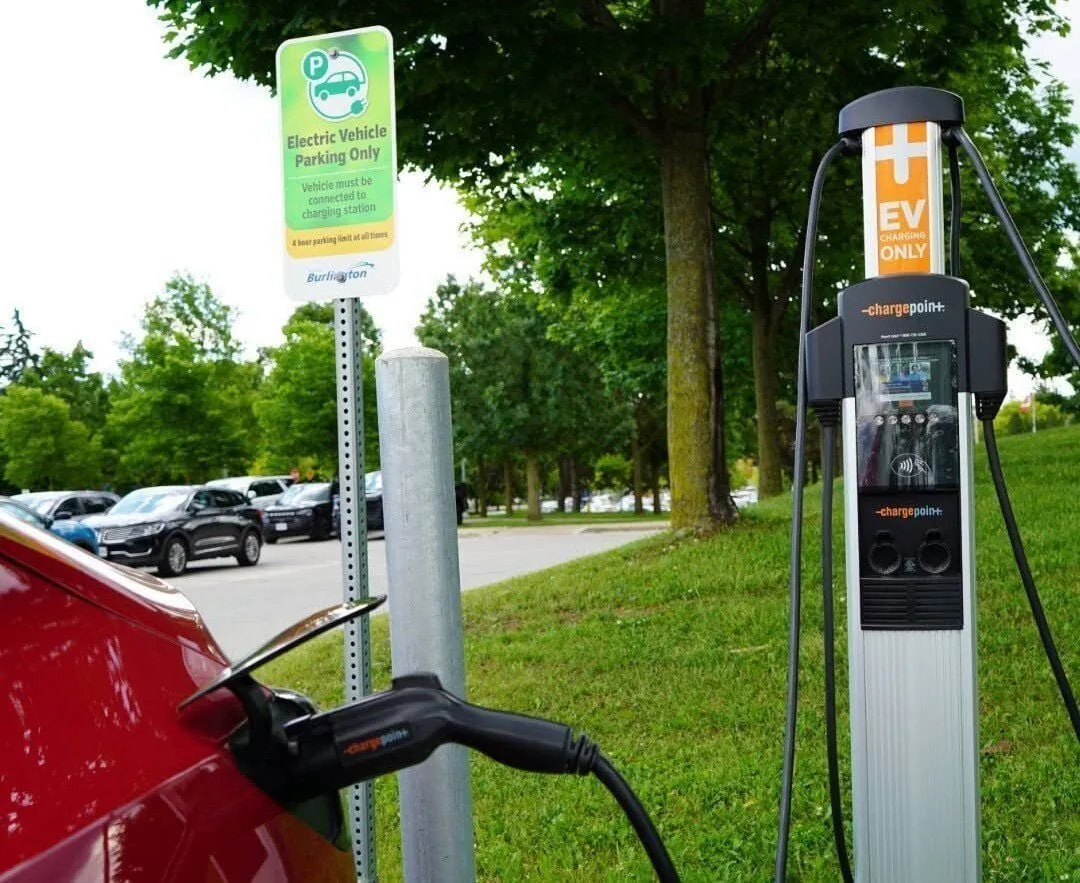
One of Ontario's longest-running free-charging perks is officially over. Starting Oct. 1, the City of Burlington will bill EV drivers at its municipal charging stations for the first time since it installed its first units 11 years ago, ending a run of free electricity that dates back to when the network was exactly two stations in 2015.
The city now operates 49 charging stations, and a March staff report says they cost roughly $120,000 a year in electricity, licensing, maintenance and repairs. Utilization is climbing along with the fleet itself: Ontario Ministry of Transportation data shows 5,533 EVs registered in Burlington as of June 30, up 1,659 in just over a year. "The city is facing rising costs for maintenance, repairs and electricity as its electric vehicle charging infrastructure expands and utilization increases," the report stated, as reported by the Burlington Post.
The new fee schedule
| Charger type / location | First 4 hours | After 4 hours | Overnight (9 p.m.–7 a.m.) |
|---|---|---|---|
| Level 2 — downtown | $2/hr | $4/hr | $0.50/hr |
| Level 2 — community facilities | $1.50/hr | $4/hr | $0.50/hr |
| Level 3 — all locations | $10/hr at all times | ||
Regular parking fees still apply while plugged in, and the city says no hardware changes are needed — "the payment system just needs to be turned on through the operating system by staff." Locations are listed at burlington.ca/ev.
Why advocates support fees — but not this billing method
Stephen Bieda, national director of the EV Society, told the Burlington Post the not-for-profit generally supports moving away from free charging: "While free charging was a great incentive for early EV adoption, it is no longer a sustainable model for municipalities." Fees, he said, ensure charger availability, encourage turnover and fund maintenance and expansion.
His objection is the hourly billing itself. "Billing by the hour for EV charging is like paying for gas by the minute, but the speed of the pump changes depending on what car you drive and the weather outside," Bieda said. Not all EVs charge at the same speed, and batteries charge slower in cold weather or above 80 per cent state of charge.
"Under a time-based (hourly) rate, a driver charging in January could pay twice as much for the exact same amount of electricity as a driver charging in July, simply because the cold battery took longer to accept the charge," he said. His recommended fix is a hybrid model: a set rate per kilowatt-hour — "the EV equivalent of a litre of gasoline" and "the only equitable way to sell electricity" — paired with an idle fee that kicks in once the vehicle finishes charging, so drivers still move their cars promptly.
The Canadian context
Burlington is following a well-worn path. Municipalities across Canada introduced free public Level 2 charging as an adoption incentive in the mid-2010s, then flipped on fees as utilization rose and hardware aged. The pattern now repeating is the second wave: cities that charged by the hour originally are being pushed toward per-kWh billing as cold-weather fairness arguments gain traction — a debate that matters more in Canada than almost anywhere else, since a January charge in the GTA can genuinely take half again as long as the same charge in July.
For Burlington's 5,500-plus EV owners, the practical takeaway: the $0.50 overnight rate is now the cheapest municipal electrons in the city, downtown daytime charging costs more than many private networks' per-kWh equivalents for slower vehicles, and the Level 3 rate works out fine for a quick top-up but punishes anyone who leaves a car plugged in.
Looking for EV deals, insurance, or financing? Check out our partner deals and offers.
If you found this guide helpful, use our Tesla referral link for free Supercharging credits on a new Tesla purchase or lease in Canada.
Next story · swipe left
Next story
First Chinese EVs Arrive in Canada Under the New Import Quota: What's Actually Here
5 min read
The first Chinese-built electric vehicles are landing at Canadian ports under the Carney government's 24,500-vehicle import quota — and BYD is the brand most often named. Here is what the import data shows and what it means for Canadian EV prices.
The Charge Brief
Get Canada’s EV transition in your inbox
One email a day. No spam, unsubscribe anytime.