technology
teslaGermany Pushes Tesla FSD EU Vote to December; Croatia Becomes 8th Country to Approve
Germany's Transport Ministry confirms EU-wide FSD approval vote delayed to December amid speed-offset concerns. Meanwhile, Croatia joins seven other European countries in recognizing Dutch RDW provisional approval for FSD Supervised.
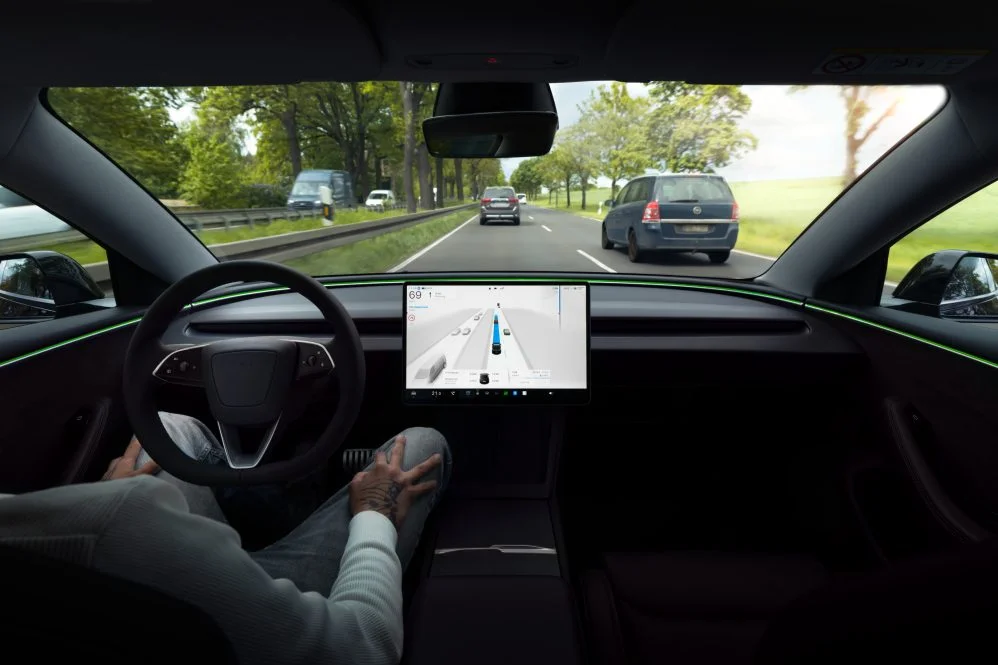
Germany's Federal Ministry for Transport has confirmed that an EU-wide vote on Tesla's Full Self-Driving (FSD) Supervised system will not happen until December 2026, pushing back the previously expected October 6 timeline. The delay comes as the European Transport Safety Council raises concerns about FSD's "speed offset" feature allowing system-initiated speeds up to 50 per cent above detected limits.
Separately, Croatia became the eighth European country to approve FSD Supervised on September 29, following the same Article 39 provisional recognition pathway used by the Netherlands, Denmark, Belgium, Estonia, and Lithuania. Tesla Europe announced the approval via X, stating rollout to Croatian owners would begin "soon."
Why Germany matters for the EU vote
A bloc-wide EU approval requires a qualified majority — at least 15 member states representing 65 per cent of the EU population. The five countries that have approved via the Dutch RDW pathway cover only about 8.9 per cent of that population. Germany, as the EU's largest economy and auto market, is a pivotal vote.
According to Germany's Transport Ministry (BMDV), the country "remains open to new technology" but its Federal Motor Transport Authority (KBA) is still reviewing documentation and communicating with Tesla and the Dutch RDW. The ministry specifically cited FSD's ability to initiate speeds up to 50 per cent above detected speed limits as an outstanding concern.
Speed offset: the technical sticking point
The European Transport Safety Council (ETSC) formally objected this week to what it calls FSD's "speed offset" — the system's design allowance to exceed posted limits by up to 50 per cent when matching surrounding traffic flow. The ETSC argues this conflicts with UN Regulation 171 for Driver Control Assistance Systems, which requires assisted driving systems to respect speed limits.
Tesla sought an Article 39 exemption for this behaviour during its Dutch approval process. The Dutch RDW granted provisional approval in April, but extending that approval EU-wide requires all member states to accept the same exemption — and Germany's KBA has not yet signed off.
Croatia follows the Dutch path
Croatia's approval brings the national-recognition count to eight countries (Netherlands, Denmark, Belgium, Estonia, Lithuania, France — with two test vehicles — Czechia, and now Croatia). Each has recognized the Dutch RDW's April provisional approval under Article 39 of EU type-approval rules, which allows a member state to accept another's approval pending EU-wide harmonization.
Tesla says more than 70,000 customers in the five fully-approved countries drive over one million kilometres per day with FSD Supervised. The company's published safety dashboard claims 4.1× fewer crashes per kilometre versus manual Tesla driving across 102 million kilometres of data.
Canadian context: no timeline, but watching closely
Transport Canada classifies FSD as an advanced driver assistance system requiring driver attention at all times. No province has created a pathway for supervised autonomy beyond current SAE Level 2 rules. Canada does not have a regulatory process comparable to the EU's Technical Committee on Motor Vehicles.
The EU vote — whenever it occurs — will be the most significant regulatory precedent for supervised autonomy in a major Western market. A December decision extending Dutch approval EU-wide would add pressure on other jurisdictions, including Canada, to clarify their positions on hands-on supervised systems.
Looking for EV deals, insurance, or financing? Check out our partner deals and offers.
If you found this guide helpful, use our Tesla referral link for free Supercharging credits on a new Tesla purchase or lease in Canada.
Next story · swipe left
Next story
Hyundai Canada Posts Best-Ever August — Tucson Leads as Genesis Rides the GV90 Reveal
4 min read
Hyundai and Genesis combined for 13,704 Canadian sales in August, an all-time August record. The Tucson set its own August benchmark with 4,265 units, and the GV90 electric flagship debut capped the month.
The Charge Brief
Get Canada’s EV transition in your inbox
One email a day. No spam, unsubscribe anytime.