
industry
powerCanadian ZEV Adoption Hits 16% in September as Rebound Shows Staying Power
Automotive News reports Canadian zero-emission vehicles reached 16% of new-vehicle sales in September 2026, up from 13.0% in August and 10.7% in Q2, confirming a sustained post-rebate recovery.

Canadian zero-emission vehicle (ZEV) sales reached 16 percent of the new-vehicle market in September 2026, according to Automotive News, marking the strongest monthly share since the federal iZEV rebate programme resumed in early 2026. The figure represents a meaningful step up from 13.0 percent in August and 10.7 percent in Q2, confirming that the rebound is not a one-month spike but a multi-quarter trend.
What the numbers show
Automotive News' reporting on September registration data puts ZEV share at 16.0%, a 300-basis-point jump from the 13.0% recorded in August (22,716 units per Statistics Canada). That follows a Q2 2026 average of 10.7% (58,811 units) and a Q2 2025 baseline of just 8.6% before the original federal iZEV rebate lapsed.
- September 2026: 16.0% ZEV market share
- August 2026: 13.0% (22,716 units, StatsCan)
- Q2 2026 average: 10.7%
- Q2 2025 (pre-rebate): 8.6%
Why the rebound is holding
Three structural factors are supporting the improvement:
- Rebate continuity: The federal iZEV rebate (up to $5,000 CAD) has been active since early 2026, removing the cliff-edge that hit sales in late 2025.
- Luxury-tax threshold raised to $150,000: The November 2026 federal budget lifts the 10% luxury excise-tax threshold for EVs from $100,000 to $150,000, removing a tax penalty on mid-to-upper-range EVs.
- Charging infrastructure build-out: The 2026 federal budget allocates $587 million over five years to fund 55,000 additional public chargers under the renewed ZEVIP programme, reducing range-anxiety barriers in suburban and rural areas.
What it means for Canadian buyers
A 16% ZEV penetration rate is still well below the 38% target the C.D. Howe Institute flagged as unrealistic for 2026, but the direction of travel is positive. For prospective buyers, the combination of active rebates, the higher luxury-tax threshold, and expanding charger networks means the total cost of ownership gap versus a comparable ICE vehicle is narrowing — particularly in the $100,000–$150,000 CAD price band where the tax change is most consequential.
Analysts caution that provincial variation remains large: B.C. and Quebec continue to lead in share, while provinces without provincial top-up rebates (e.g., Alberta, Saskatchewan) lag behind the national average.
Looking for EV deals, insurance, or financing? Check out our partner deals and offers.
If you found this guide helpful, use our Tesla referral link for free Supercharging credits on a new Tesla purchase or lease in Canada.
Next story · swipe left
Next story
Chinese EV Makers Seek Safety Certification as Quota Usage Hits 31%
5 min read
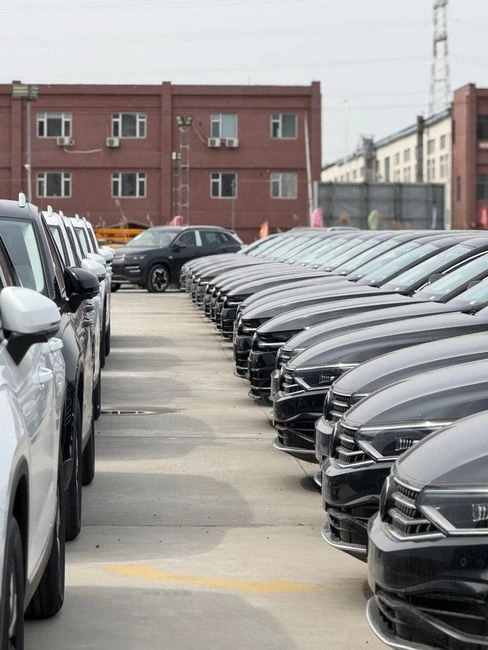
Canada's 49,000-vehicle Chinese EV quota is only 31% used after eight months, and the federal government says the slow start is partly because Chinese automakers are still seeking safety certification to sell here. The next six months should tell us whether the Carney-Xi trade deal actually delivers affordable EVs to Canadian buyers.
The Charge Brief
Get Canada’s EV transition in your inbox
One email a day. No spam, unsubscribe anytime.