
technology
chargingGeely Unveils 2.25 MW Smart Charge System Challenging BYD's Flash Charging Dominance
Geely's new AI-driven charging technology delivers 2,250 kW peak power, 12C battery charging from 10%-70% in 4.5 minutes, and plans for 50,000+ units by 2027, positioning to compete with BYD's expanding Flash Charging network in Canada.
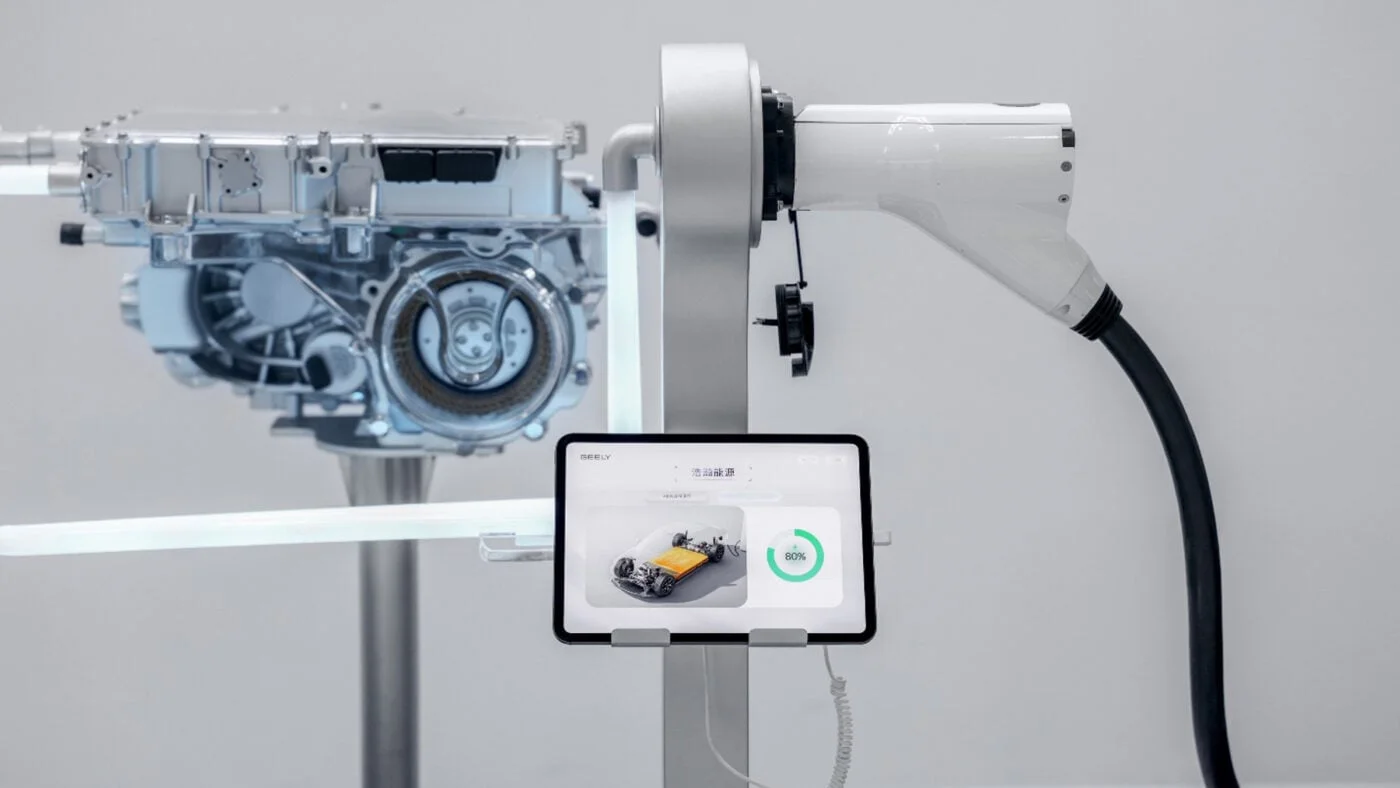
Chinese automaker Geely has officially unveiled its "Geely Smart Charge" technology, a new AI-driven charging system capable of delivering up to 2,250 kW (2.25 MW) of peak power through a single charging gun—surpassing BYD's Flash Charging column maximum of 1,500 kW.
The announcement, made in Ningbo alongside the fifth-generation Geely Smart Charging Station, centers on Geely's _Xingrui PowerMind_ energy model developed in collaboration with Chinese AI company StepFun. This system enables three core functions: Extreme Charge, Smart Charge, and Auto Charge, utilizing thermal prediction algorithms to forecast battery temperature changes 30 seconds in advance and dynamically adjust charging power.
Technical specifications and performance
According to Geely, the system maintains battery average temperature below 55°C and peak temperature strictly under 65°C through liquid cooling extending from stationary battery storage through the charging station, cable, connector, and into the vehicle battery.
Test data from the China Automotive Technology and Research Centre (CATARC) shows a Lynk & Co 10 model equipped with this technology achieved:
- Peak charging power of 1,093 kW
- During 10% to 97% charging: battery maintained temperatures below 55°C for 57% of total charging time
- Maximum recorded temperature of 64°C
- Charging time: 4 minutes 30 seconds from 10% to 70%
- Charging time: 8 minutes 40 seconds from 10% to 97%
Geely also introduced its new generation of Aegis Golden Brick ultra-short blade batteries to complement the charging system:
- 12C battery: 395 mm version featured in Lynk & Co 10 and Zeekr 001 models, achieves peak charging rate of 12C, charging 10%-70% in approximately 4 minutes 30 seconds and 10%-97% in about 8 minutes 40 seconds
- 6C battery: 370 mm version debuting in the new Geely Galaxy E5, offers peak charging rate of 6C, achieving 10%-70% charge in approximately 8 minutes 25 seconds
Infrastructure rollout and consumer incentives
By the end of 2027, Geely aims to deploy over 100,000 charging guns nationwide, with more than 50,000 being Geely Smart Charge units, ensuring coverage across all counties in China.
To support adoption, Geely announced a new user incentive policy: first-time owners of new models equipped with Geely Smart Charge technology receive a charging allowance of 1,000 yuan (approximately $150 USD) annually for two years (totalling 2,000 yuan / $300), valid for vehicles purchased before January 1, 2028. Additionally, the battery warranty for both new and existing eligible models has been upgraded from 8 years/150,000 km to 8 years/200,000 km.
The company also addresses battery longevity concerns through a lithium-ion pulse regeneration process that uses micro-pulses to reactivate lithium ions accumulated at the negative electrode, claiming this combined with AI-based charging management increases cycle life by up to 20 percent.
Context: Charging the EV infrastructure arms race
Geely's advancement comes as BYD had already installed 10,000 of its Flash Charging stations by the end of August 2026 and aims to reach 20,000 by the end of 2026. Battery manufacturer Sunwoda has also introduced a fast-charging battery and plans to build 10,000 megawatt-class charging stations by the end of 2027.
While Geely's peak power exceeds BYD's current offering, real-world test results show the Lynk & Co 10 achieved only 1,093 kW peak power—suggesting the full 2,250 kW capacity may require specific battery and vehicle configurations to realize. Nevertheless, the push toward megawatt-level charging infrastructure highlights the intensifying competition not just on battery and vehicle technology, but on building the appropriate charging network to support ultra-fast charging capabilities.
For the Canadian market, where charging speed and infrastructure availability remain key considerations for EV adoption, these developments signal increasing options for ultra-fast charging solutions as Chinese EV manufacturers continue to innovate in both vehicle and charging technology domains.
Looking for EV deals, insurance, or financing? Check out our partner deals and offers.
If you found this guide helpful, use our Tesla referral link for free Supercharging credits on a new Tesla purchase or lease in Canada.
Next story · swipe left
Next story
Buying a Used EV in Canada? Battery Health Checks Are Becoming the New Normal
5 min read
With lease returns flooding the market and Canada's EV registrations up 22.3%, third-party battery diagnostic reports are emerging alongside traditional vehicle history checks. Here is what a battery report costs, what it reveals, and why Canadian buyers shouldn't skip it.
The Charge Brief
Get Canada’s EV transition in your inbox
One email a day. No spam, unsubscribe anytime.