
technology
quebecQuebec's dcbel Is Powering the Biggest V2X Experiments in North America — From Homes That Can't Buy It Yet
Montreal-based dcbel's Ara home energy station anchors utility V2X pilots in Massachusetts and California, paying drivers up to US$3,200 a year to feed stored power back to the grid. The technology is Canadian; the programs, so far, are not.
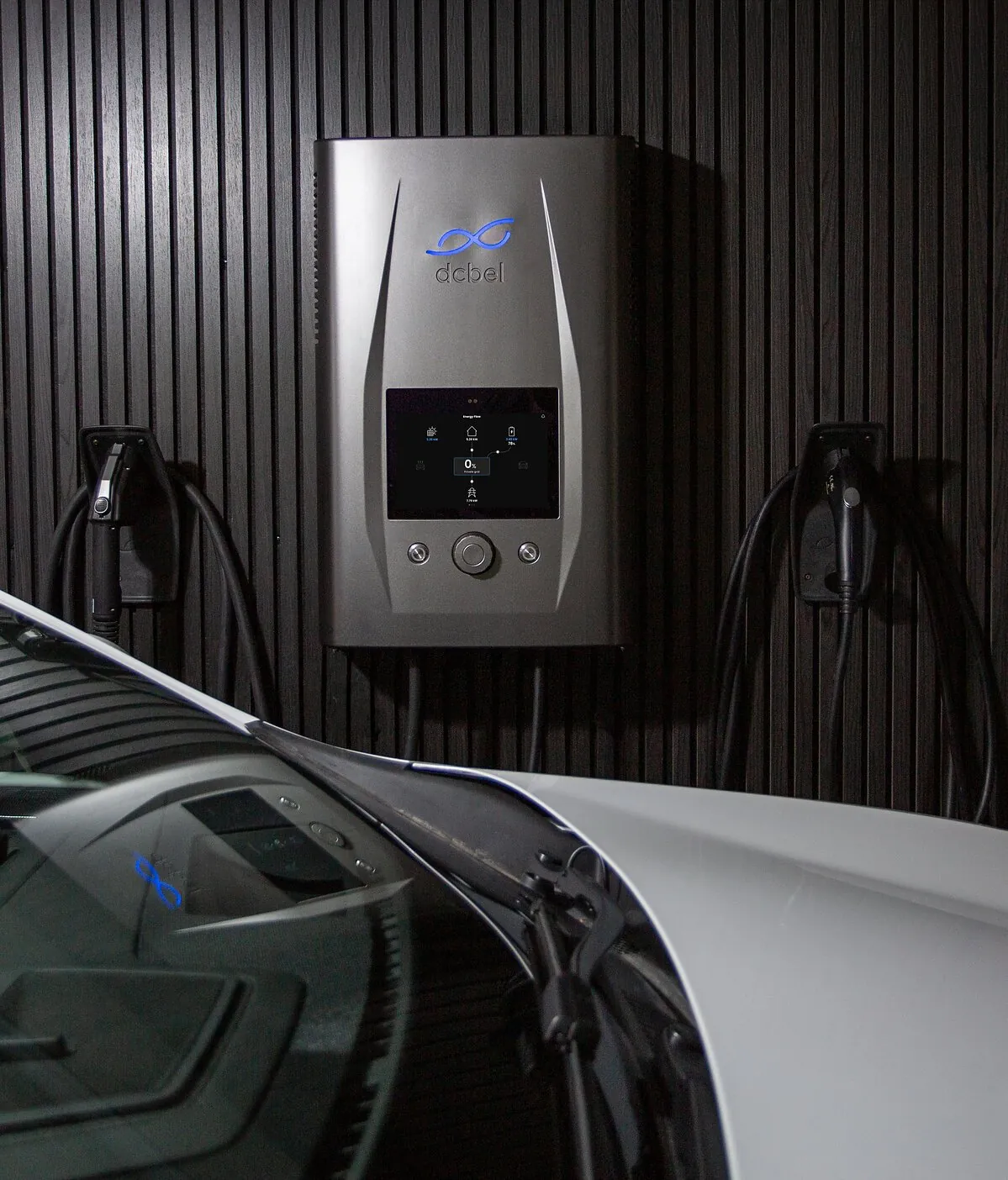
One of the more interesting threads in vehicle-to-grid technology runs through a Quebec company whose hardware is now at the centre of two major American utility experiments. As The Energy Mix reported September 3, Montreal-based dcbel's Ara home energy station is the backbone of the Massachusetts Clean Energy Center's V2X pilot program, and is also being used in a Pacific Gas and Electric pilot in California — programs that pay homeowners to turn their parked EVs into grid resources.
How the programs work
V2X — "vehicle to everything" — lets homeowners use their EV batteries bidirectionally: charging from the grid, storing energy, and discharging it back for home use or grid support when demand peaks. In Massachusetts, the MassCEC program fully subsidizes the roughly US$10,000 Ara system, including installation, in exchange for access to the EV battery's stored power during blackouts. Participants can save up to US$1,300 per year by charging during off-peak hours and drawing on stored power when rates peak, according to dcbel's own August 11 release.
Eligibility is narrow by design: drivers must own or lease a 2018–2025 Nissan Leaf, a 2025 Polestar 3 or a 2025 Volvo EX90, and not already have solar panels or battery storage installed. In California, Ara appears in PG&E's pilot under the state's REDWDS grant program, where enrolled drivers can make up to US$3,200 annually by discharging stored electricity back to the grid. dcbel says that in a blackout, Ara can keep a home's lights on for up to 10 days using the EV's battery.
Small numbers, real money
The honest caveat is scale. Despite the incentives, enrollment is low: the PG&E bidirectional pilot counted only 51 participants as of July 2026 (out of more than 20,000 in the utility's broader managed-charging programs), and the MassCEC program includes just 45 residents. Applications for the Massachusetts program close September 30, 2026, with dcbel saying limited spots remained as of its release.
Two structural limits explain the gap. Technology first: according to the Center for Sustainable Energy, only about 40 EV models offer bidirectional capabilities as of May, and only a handful support full V2X. Regulation second: most grid rules were written for one-way charging. "Bidirectional charging technology is trapped by one-way rules," energy economist Steve Letendre told Microgrid Knowledge — most jurisdictions permit rooftop solar to export power to the grid, while EVs are still prohibited from doing the same.
The Canadian irony
The technology's engineering home is Quebec — dcbel is Montreal-based, and the Ara station monitors home electricity use and generation to manage a dwelling's engagement with the grid — but the programs now paying drivers for their batteries are in the United States. Quebec's hydro grid, with its winter demand peaks, is exactly the kind of system V2X is meant to serve, and the pilots on both sides of the border point the same direction: the vehicles are increasingly capable of bidirectional power. The rules, regulators and utility programs are what's still catching up.
For Canadian EV owners, the story is a preview rather than a product launch: a demonstration of what a home energy station can do once a regulator and a utility decide an EV battery is a grid asset — and a reminder that the hardware making it possible was built in Montreal.
Looking for EV deals, insurance, or financing? Check out our partner deals and offers.
If you found this guide helpful, use our Tesla referral link for free Supercharging credits on a new Tesla purchase or lease in Canada.
Next story · swipe left
Next story
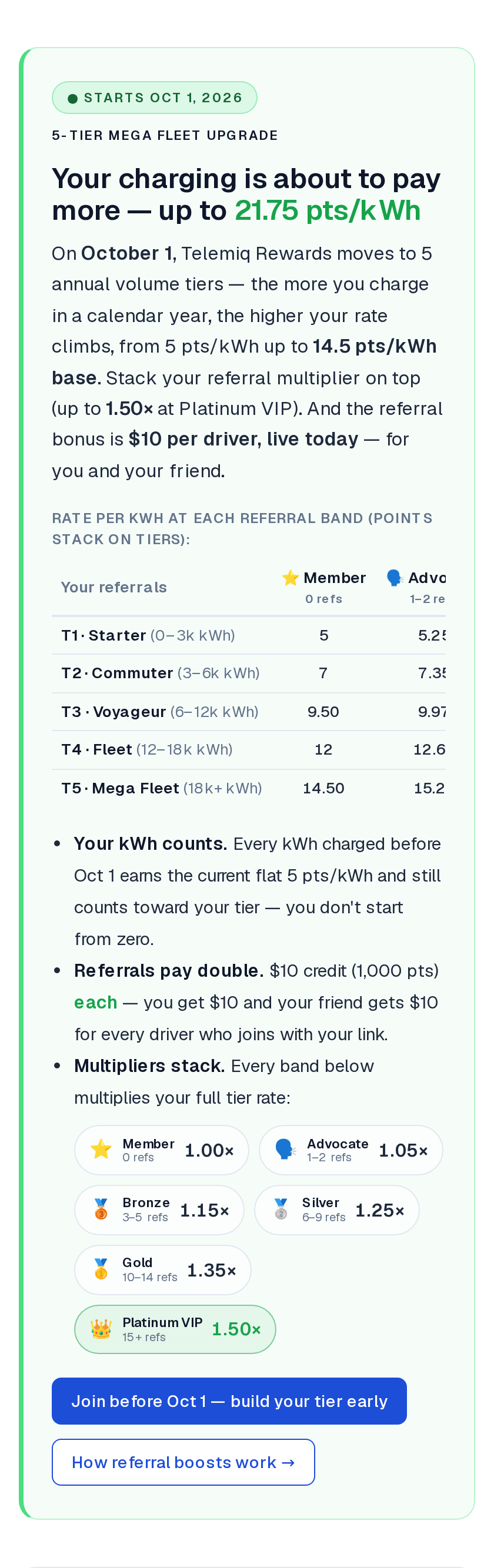
Telemiq Rewrites Its Rewards Math: Five Annual Tiers Take Over October 1 — and Home Charging Could Pay Up to 21.75 pts/kWh
7 min read
The Canadian EV rewards platform moves from a flat 5 pts/kWh to five calendar-year volume tiers reaching 14.5 pts/kWh, stacked with a referral multiplier up to ×1.50 — a natural ceiling of 21.75 pts/kWh — plus $10 per qualified referral, each side.
The Charge Brief
Get Canada’s EV transition in your inbox
One email a day. No spam, unsubscribe anytime.