
policy
teslaChina EV Quota's First Window Closes Tonight With 11,000+ Permits Unused — and Tesla Claimed the Bulk
Canada's first 24,500-vehicle Chinese-EV quota window ends August 31 with more than 11,000 permits unclaimed. The second window opens September 1 with carry-over headroom — and no new allocation rules despite a spring consultation. Tesla's Shanghai-built Model 3 took the lion's share of window one.
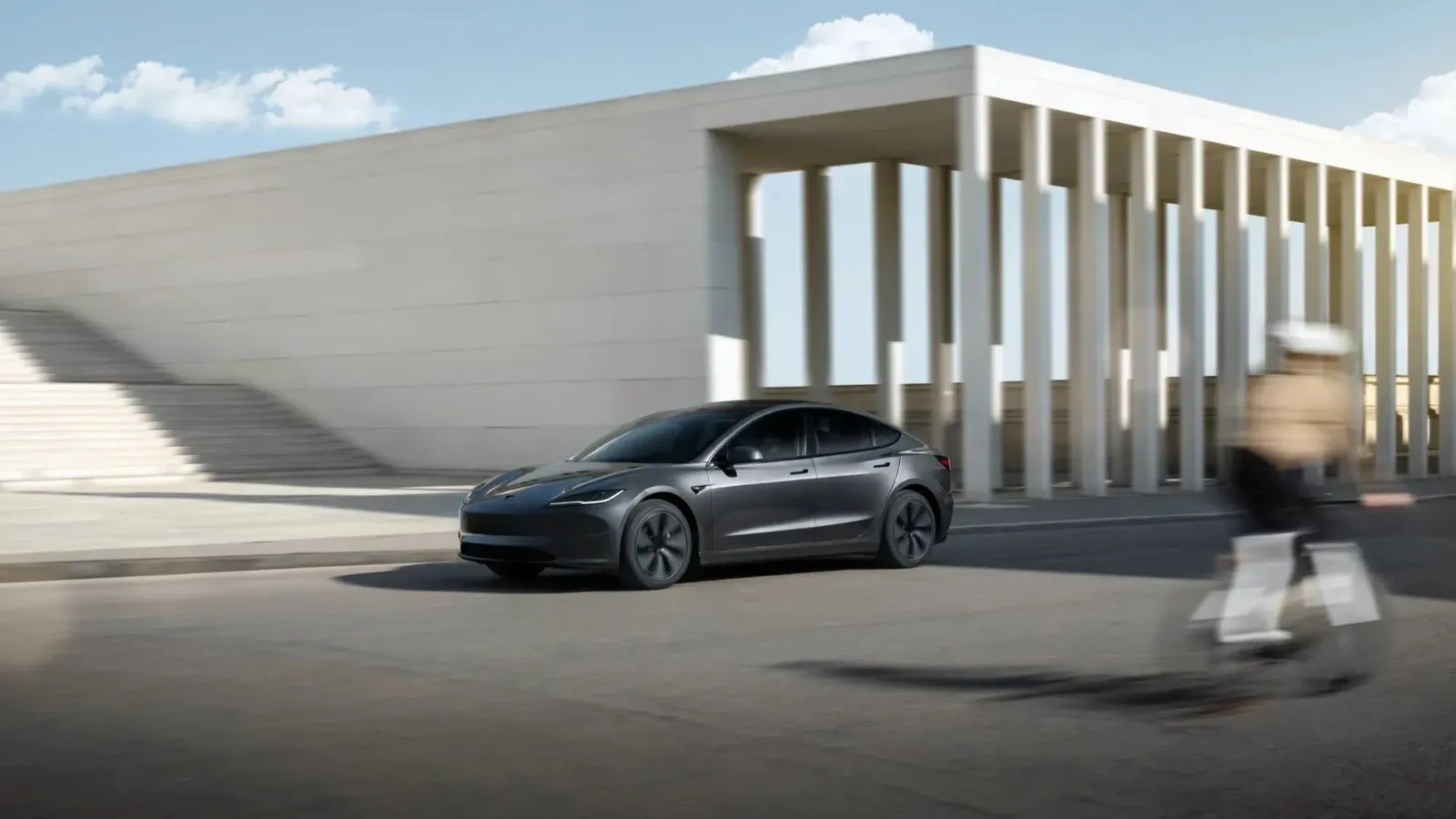
Canada's first six-month window for reduced-tariff Chinese-built electric vehicles closes at midnight tonight with more than 11,000 of its 24,500 import permits still unused — and the automaker that claimed the bulk of them is not BYD, Chery or Geely. It's Tesla, according to a GlobalChinaEV analysis published August 31 as the program's second window prepares to open September 1.
The quota is the mechanism of the trade arrangement Prime Minister Mark Carney reached with Beijing on January 16, 2026, which replaced the 100 percent surtax on Chinese-built EVs with a 6.1 percent most-favoured-nation tariff. The deal caps imports at 49,000 vehicles in year one — split into two 24,500-unit tranches — growing 6.5 percent annually toward roughly 70,000 by 2030. Permits were issued first-come, first-served under Notice to Importers Serial No. 1162, valid for 60 days.
How Tesla ended up the quota's biggest user
Nothing in the rules reserves quota space by brand or country of ownership — only that the vehicle be built in China. Tesla relaunched its Shanghai-built Model 3 in Canada on May 1 starting at $39,490, using the quota to sidestep the 25 percent tariff applied to U.S.-built vehicles. By the end of May, importers had drawn only 2,910 vehicles under the program, and just 18 were confirmed as something other than a Tesla: Lotus Eletre SUVs from Geely's stable. Global Affairs Canada does not break utilization down by brand, but with Tesla and Lotus the only Chinese-built models shipping in volume this spring, the Model 3 accounted for the bulk of the total by elimination.
Usage then accelerated: 37.7 percent by mid-July, 51 percent (12,513 vehicles) by August 7, and 15,063 of 24,500 permits — 61.5 percent — by late August. The price split ran nearly even, with 7,747 vehicles entering under $35,000 against 7,013 above that line. Geely's Polestar reopened Canadian orders for the China-built Polestar 2 in June at $69,900 with September shipments slated, and Ford used the quota in July to resume imports of the Lincoln Nautilus hybrid from $62,996 — the first established Western automaker documented using the framework.
The Chinese brands stayed home
The automakers the quota was designed to welcome moved cautiously. BYD is assembling a Canadian retail network of roughly 20 dealerships beginning in the Greater Toronto Area but has confirmed neither a launch date nor pricing. Chery has staged Omoda and Jaecoo vehicles in the Toronto area since April while certification continues — Transport Canada homologation is taking a year or longer for some brands. Dongfeng showed six EVs in Montreal in July targeting a 2027 entry with two models under $35,000. Several brands originally targeting late-2026 deliveries have pushed launches into 2027, wary of committing dealer capital without knowing how much quota will remain when Chinese-badged models are actually ready to sell.
September 1 opens with the rules unresolved
Unused first-window permits carry forward, so the second window — running September 1 through March 2027 — could open with an effective ceiling well above its 24,500 base. But how it will be administered is genuinely unknown. Global Affairs Canada consulted industry from April 7 to May 1 on replacing first-come, first-served with per-manufacturer allocations, alongside questions on multi-year allocations, under-utilization penalties, allocation transfers and the 60-day permit validity. A longer-term policy was expected in June; as of August 31 no notice has been published, and the consultation page still promises only that a summary report will come.
An allocation cap would directly limit how much of the quota Tesla — or any single company — can claim in window two. The politics are pushing the same direction: Industry Minister Mélanie Joly told visiting Chinese automakers in June that volumes beyond the 49,000-unit cap would require Canadian manufacturing structured as a majority Canadian-owned joint venture using Canadian-sourced parts, Canadian labour standards and secure vehicle software. Ottawa's April rejection of Stellantis's Leapmotor kit-assembly proposal at Brampton Assembly signalled how strictly those conditions will be applied. And with Canada-U.S. tariff talks collapsing August 21 and Canadian retaliatory tariffs set to begin September 8, auto tariffs remain the pressure point making Chinese EV access a jobs-and-investment question rather than just a pricing one.
What it means for Canadian buyers
- Shanghai-built Model 3 pricing holds: Tesla's $39,490 entry point was built on quota access, and carry-over headroom means no supply squeeze for September.
- Chinese-brand EVs stay a 2027 story: certification timelines and dealer buildouts, not quota scarcity, are the bottleneck for BYD, Chery and Dongfeng.
- No federal rebate on any of it: Chinese-built EVs remain ineligible for the federal Electric Vehicle Affordability Program because China has no free-trade agreement with Canada; some B.C. and Quebec provincial programs may still apply depending on the model.
- Watch for the allocation notice: if Ottawa publishes per-manufacturer rules mid-window, the import mix — and who gets cut off — could change overnight.
The first window's quiet lesson is that a quota designed around Chinese brands was mostly consumed by an American one importing from China. Whether the second window looks different depends entirely on a policy document that, as of tonight, still does not exist.
Looking for EV deals, insurance, or financing? Check out our partner deals and offers.
If you found this guide helpful, use our Tesla referral link for free Supercharging credits on a new Tesla purchase or lease in Canada.
Next story · swipe left
Next story
Lynk & Co 08 Demonstrates All-Round Capability on a 3,200+ km Desert Expedition
3 min read
The Lynk & Co 08, a premium plug-in hybrid SUV, has just proven its mettle in one of the most grueling automotive challenges on the planet. As the official…
The Charge Brief
Get Canada’s EV transition in your inbox
One email a day. No spam, unsubscribe anytime.