
policy
teslaCarney Says He Sold His Tesla for Less Than Expected, Warns on Starlink Reliance
Prime Minister Mark Carney revealed at the NYT DealBook Summit that he sold his Chinese-built Tesla at a loss and warned that Canada's reliance on Starlink is a national security vulnerability. The remarks came as he defended Canada's EV trade deal with China.

Prime Minister Mark Carney used a high-profile interview at The New York Times DealBook Summit on November 18 to disclose that he had sold his Tesla — and that the resale price was lower than he expected. The remark, delivered with a quip of "Sorry, Elon," came as Carney defended Canada's trade arrangement with China that allows up to 49,000 Chinese-built EVs annually at a 6.1% tariff.
The Tesla sale
Speaking with Andrew Ross Sorkin by video from Shenzhen, where he was attending APEC meetings, Carney acknowledged he had owned one of the Teslas imported from China under the new quota. "Sorry, Elon," he said when asked about the sale. "I don't have it anymore."
Carney joked that the resale value was less than he had hoped. Asked why he sold it, he explained that becoming prime minister meant he was no longer allowed to drive himself — a standard security restriction for the office.
The disclosure was first reported by Tesla North and confirmed by iPhone in Canada and Drive Tesla Canada. The clip does not specify which model Carney owned, what he paid for it, or the final sale price. Carney's comment described his personal experience, not a new data set on Canadian Tesla resale values.
Defending the China EV deal
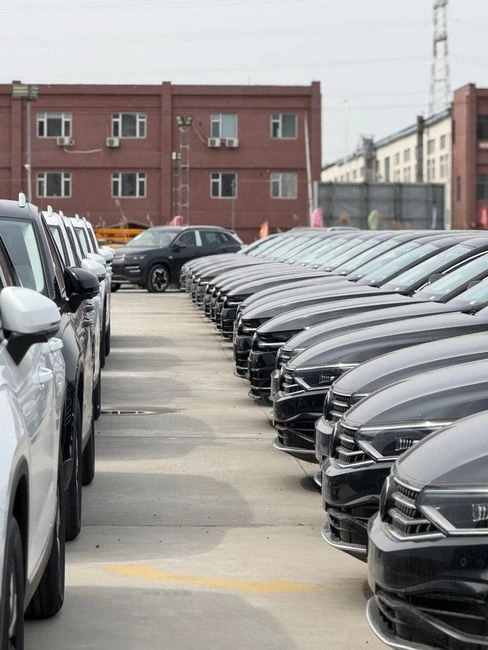
Carney used the moment to defend Canada's January trade agreement with China. That deal established an initial annual quota of 49,000 Chinese-made EVs at a 6.1% tariff — replacing the previous 100% surtax. The quota applies based on where the vehicle is built, not the brand, meaning Shanghai-built Teslas benefit alongside Chinese brands like BYD and Geely.
Global Affairs Canada says the quota took effect March 1. The arrangement replaced the earlier 100% surtax for eligible imports under the quota, rather than offering unlimited low-tariff access. Carney put the volume at less than 3% of Canada's total vehicle market and said the arrangement would remain capped over the next few years.
For Canadian buyers, the import rule has already affected availability. Tesla paused Model 3 Premium orders in October after saying demand had used up its allocation of China-built EV imports. By October 31, the Premium trims were back on its Canadian design page, but with a sign-up for updates instead of an order button. That was Tesla's allocation, not a declaration that Canada's entire national quota had been exhausted.
Starlink concerns meet Canada's SpaceX ties
In a separate part of the DealBook interview, Carney also raised concerns about relying on Starlink or its related Starshield technology. Citing cases including Ukraine, he said that dependence could turn an advantage into "a huge vulnerability," and argued that countries were looking for backup or sovereign systems.
That builds on his earlier warnings about tying Canada's defence capabilities to a single satellite provider. But moving away from reliance on one network is not the same as cutting Canada's ties with SpaceX.
Starlink said in July 2025 that it served more than 500,000 customers across Canada — a dated customer milestone, not a current count or a tally of individual Canadians, but it shows how established the service already was.
There is also an irony in the proposed Canadian alternative. Federally backed Telesat Lightspeed has contracted SpaceX to help deploy its constellation. Telesat announced 14 Falcon 9 launches in 2023, meaning SpaceX has a role in putting a competing network into orbit. Those are launch services, not an agreement to run Lightspeed over Starlink.
Canadian pension money has benefited from SpaceX too. Ontario Teachers' Pension Plan said SpaceX was a significant contributor to its 9.5% total-fund net return in the first half of 2026. That percentage covers the whole fund, not SpaceX alone, and the release did not disclose a separate dollar gain from the investment.
These are different decisions by different organizations. Ontario Teachers' is not Ottawa, and hiring SpaceX to launch satellites is not the same as depending on Starlink for secure communications. The tension is that Canada wants more independence from one provider while customers, a competing satellite operator and a major pension plan all have reasons to keep working with its parent company.
Looking for EV deals, insurance, or financing? Check out our partner deals and offers.
If you found this guide helpful, use our Tesla referral link for free Supercharging credits on a new Tesla purchase or lease in Canada.

Next story · swipe left
Next story
First Chinese-Made EVs Arrive in Canada Under Carney-Xi Deal
4 min read
The first wave of Chinese-built electric vehicles has entered Canada under the 49,000-vehicle annual quota negotiated between Prime Minister Carney and President Xi, with BYD and Lotus leading the initial imports.
The Charge Brief
Get Canada’s EV transition in your inbox
One email a day. No spam, unsubscribe anytime.