
policy
chargingBC's New EV Charging Rule Changes What It Means to Be a landlord
British Columbia has updated building codes to require EV charging readiness in new multi-unit residential buildings. The change shifts the cost question from 'if' to 'who pays' — and tenants may not like the answer.
British Columbia's new building-code requirements for electric-vehicle charging in multi-unit residential buildings are now in force, and they are quietly reshaping the economics of apartment living in the province. The rule is not that every new suite gets a charger — it is that every suite gets the wiring and capacity to support one. That distinction sounds technical. It is actually the entire debate.
What changed, precisely
The BC Building Code now requires new apartment buildings to include conduit, panel capacity, and electrical infrastructure sized for EV charging in every parking stall. A building constructed before the change can be charger-ready only if the developer chose to spend the money. A building constructed after the change has no choice. The infrastructure goes in before the first tenant moves in.
The practical effect is that the cost of charger-readiness — estimated at a few thousand dollars per stall, amortized across the construction budget — stops being a retrofit decision and becomes a fixed line item like insulation or windows.
Who absorbs the cost
In theory, the developer pays, passes it through in rent or condo prices, and the tenant gets a building that is future-proof. In practice, the allocation is messier. Rent-controlled tenants may see rents rise when units turn over. Condo buyers absorb it in the purchase price. And the charger itself — the actual hardware that goes on the wall — remains an additional cost, paid by whoever occupies the stall and wants to plug in.
The comparison with Quebec and Ontario
Quebec's building code has required charger readiness in new residential construction for longer, and the result is visible in the province's higher share of EV-ready apartment buildings. Ontario has taken a different route, offering incentive programs for existing buildings rather than mandating new construction. BC's approach is closer to Quebec's, and the data on long-term charger adoption in Quebec buildings suggests the mandate accelerates uptake in ways that voluntary programs do not.
The landlord-tenant tension
The tension point is sub-metering. A landlord who installs chargers and pays for the electricity can pass the cost through rent or a separate EV parking fee. A tenant who owns the charger and pays the utility directly avoids the markup but needs the landlord's infrastructure first. The BC rule resolves the infrastructure half of the problem. The pricing half is still being negotiated, one building at a time, and it is the half tenants will feel most directly.
Looking for EV deals, insurance, or financing? Check out our partner deals and offers.
If you found this guide helpful, use our Tesla referral link for free Supercharging credits on a new Tesla purchase or lease in Canada.
Next story · swipe left
Next story
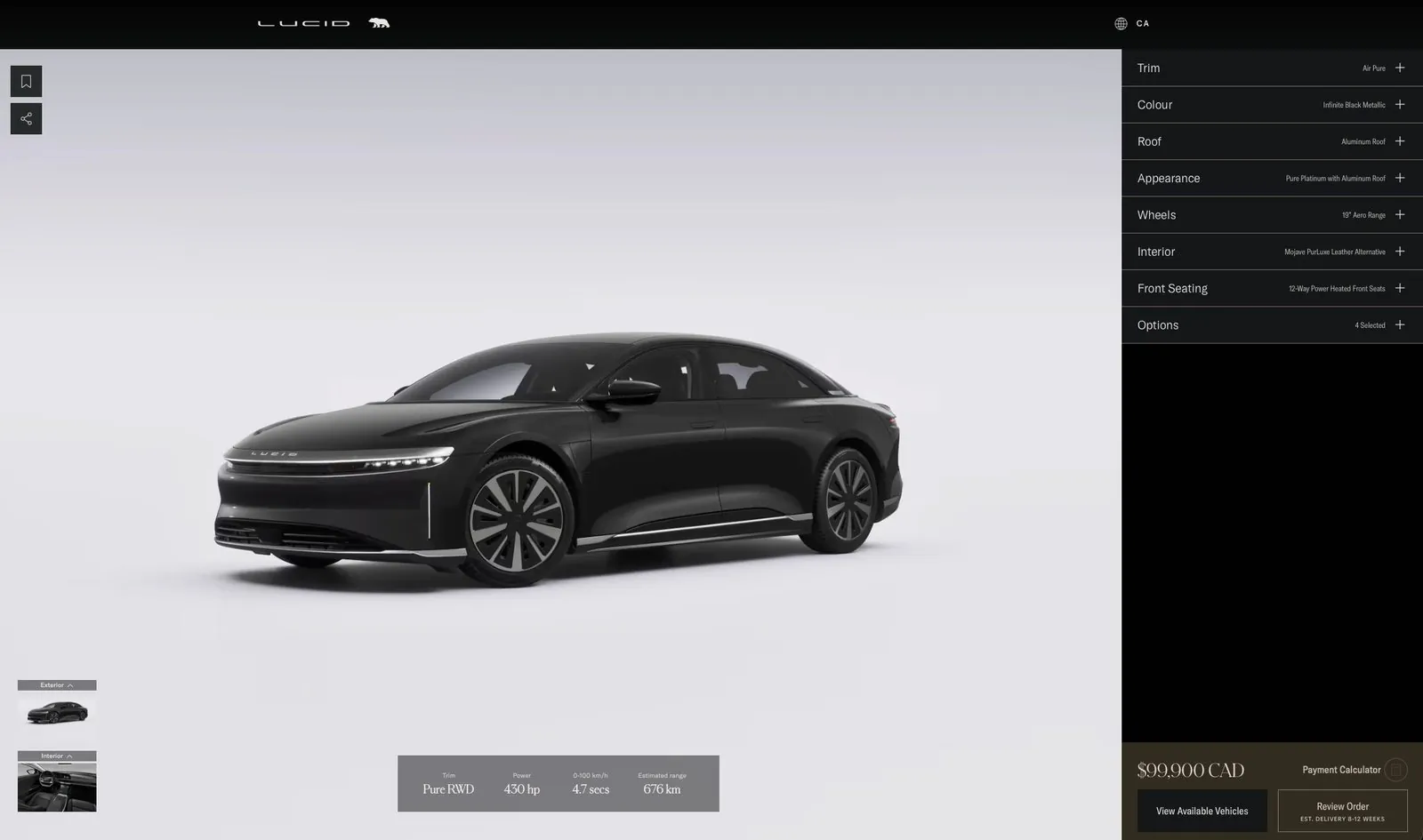
2027 Lucid Air Keeps Canadian Prices Unchanged, Simplifies Lineup
3 min read
Lucid held the line on 2027 Air pricing in Canada — Pure stays at $99,900, Sapphire at $327,300 — while streamlining options. A new Stealth & Sound Package arrives for the Air Pure at $6,200.
The Charge Brief
Get Canada’s EV transition in your inbox
One email a day. No spam, unsubscribe anytime.