
Used Tesla Model 3 Buying Guide Canada: Prices, Battery Health, and What to Avoid
How to buy a used Tesla Model 3 in Canada — real price expectations, battery health verification, the FSD transfer trap, and the model years that hold up best.
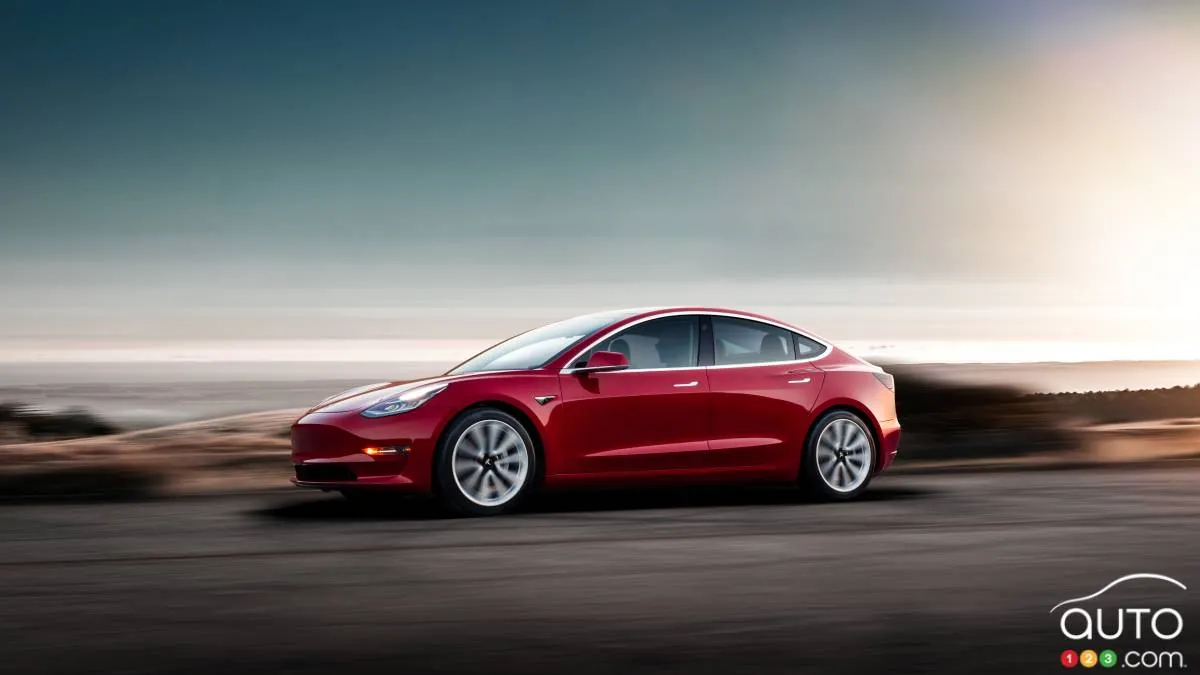
A used Tesla Model 3 is the single best value on the Canadian used-EV market: three-to-five-year-old Standard Range and Long Range units trade at a fraction of new cost while carrying most of the eight-year battery warranty, access to the Supercharger network, and the same software experience as a new car. The catches are specific and checkable — battery health, hardware generation, and the Full Self-Driving transfer trap. This guide covers Canadian pricing reality, how to verify the pack, and which model years to target.
Canadian price expectations
Used-EV prices in Canada swung hard through 2023–2025 as new Tesla price cuts repriced the whole market downward; by 2026 the curve has flattened into a stable ladder. Expect early Standard Range Plus cars (2019–2021) in the low-to-mid $20,000s, refreshed Long Range units (2021–2023) in the $30,000s, and Highland-generation cars (2024+) holding over $40,000 with remaining factory warranty. Canadian listings on Kijiji/AutoTrader and Tesla's own used inventory set the reference prices — Tesla's used inventory includes a used-vehicle warranty and is the low-hassle option when a matching unit is listed. Kilometres matter less than battery health: an 80,000-km car with a strong pack beats a 50,000-km car with a degraded one.
Battery health: verify before you buy
The battery is the car's value. Tesla vehicles display usable capacity in service mode, and third-party battery reports (the Canadian used market increasingly accepts them at inspection time) quantify degradation against original spec. The warranty floor: at least 70 percent capacity retained through eight years or 160,000 km (Standard Range: 8 years/160,000 km on the pack; the Minimum 70% retention clause is standard across Canadian-market EVs). A 2021 car at 88 percent health has years of headroom above the floor; a car already at 74 percent is a warranty-claim-in-waiting and should be priced accordingly — or passed on. Ask for a DC fast-charge session log if available: a history of exclusive supercharging is not disqualifying, but combined with high degradation it is a negotiation lever.
Hardware generations: the checklist item that matters most
Software-defined cars stratify by hardware. HW3 (2019–2023) supports FSD (Supervised) and current Autopilot features; HW4 (2023+) adds the camera suite Tesla says supports unsupervised driving as the software matures. For a buyer treating the car as transportation, HW3 is fine and cheaper; for a buyer hoping to ride FSD's trajectory, HW4 cars carry the option value. Check the build date on the door jamb and the software > Additional Vehicle Information screen — it lists the hardware generation explicitly. Older 2019 cars carry legacy Autopilot computer 2.5 with a free-camera retrofit history; they drive fine but sit at the bottom of the upgrade path.
The FSD transfer trap
Full Self-Driving is licensed to the car and — outside periodic Tesla transfer promotions — does not follow the owner to their next Tesla. Sellers listing "FSD included, $19,000 value!" price it in, but your ability to ever move that purchase onward depends on Tesla running a transfer window at your trade-in moment. Treat used-car FSD as a feature you are buying for this car only: worth something if you want FSD today (it is genuinely cheaper than adding it new), worth nothing as a resale assumption. A used car with FSD priced at bare-vehicle-plus-a-little is the arbitrage; priced at full FSD value is the trap.
What to avoid
Six flags: salvage or rebuilt titles (battery case integrity unknowable, warranty void); cars whose warranty-capped battery replacement history is undocumented; 2019-era early builds with unresolved panel/rattle reputation unless discounted; any car you cannot fast-charge test before buying (a 15-minute Supercharger session reveals charge curves, thermal behaviour, and inlet condition at once); rust-belt cars without undercarriage inspection (Canadian winters are hard on aluminum suspension hardware — relevant to the ongoing NHTSA suspension inquiry into Model 3/Y); and private sales where the seller refuses a third-party battery report. Tesla's direct used inventory avoids most of this list at a modest premium.
The bottom line
Target a 2021–2023 Long Range with HW3+, verify battery health at a number (not a vibe), fast-charge it before money moves, and treat FSD as this-car-only. Executed properly, a used Model 3 delivers new-car experience at half price with the Supercharger network attached — the strongest entry point into Canadian EV ownership in 2026.
Looking for EV deals, insurance, or financing? Check out our partner deals and offers.
If you found this guide helpful, use our Tesla referral link for free Supercharging credits on a new Tesla purchase or lease in Canada.
Next story · swipe left
Next story
Best Used Electric Cars in Canada 2026: Models That Aged Well
6 min read
Best used electric cars in Canada in 2026 — battery health, range retention, reliability, and resale value for EVs that still make sense as used purchases.
The Charge Brief
Get Canada’s EV transition in your inbox
One email a day. No spam, unsubscribe anytime.